
History of the Jews in Lithuania

Hitler Joke on National TV in Poor Taste

asta-baukute

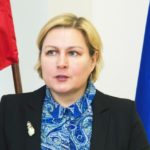
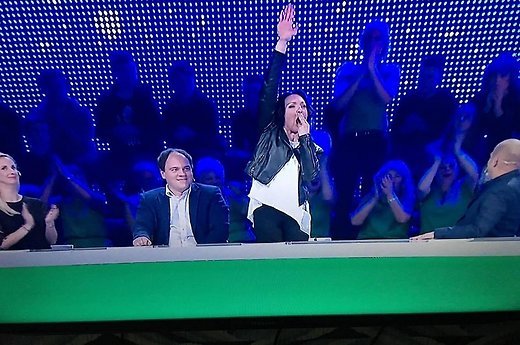
Baltic News Service reported Lithuanian Jewish Community chairwoman Faina Kukliansky responded after actress Asta Baukutė performed a gesture intended to imitate Adolf Hitler on a television program on Friday called Atspėk dainą [Name That Tune], saying the behavior was in poor taste.

“Since I haven’t looked into it, I can’t say that this is offensive, but my question would be, who needs to joke like that? There are a million other topics and perhaps this was a joke which failed. I don’t understand that kind of joke and likely others do not either, so a completely unfunny response is possible. In my understanding these sorts of things should be avoided generally. … Perhaps a little more talent and a deeper understanding is needed to pull this off, improvisation doesn’t really work. It’s even impolite and in poor taste,” Kukliansky was quoted as saying by BNS.

Friday Baukutė on the broadcast of Atspėk dainą guessed the tune by Simonas Donskovas, lept to her feet and apparently made gestures intended to imitate Hitler. The program was not live and was broadcast from material shot earlier.

Kukliansky, according to BNS, said she didn’t find Baukutė’s actions humorous and wondered why it was included in the final edit for the show.

“After seeing the initial information about, she acted very strangely. Or maybe I don’t have enough of a sense of humor, but it wasn’t funny to me at all. There might be a different subtext at work in the show which I didn’t get. I don’t understand in general why this is necessary. Aren’t there other topics? All the more since this was recorded, and perhaps there should be more caution exerted with respect to certain social groups, and more effort to make sure the program isn’t misinterpreted. Most likely Ms. Baukutė didn’t intend anything bad, she was probably making fun of Hitler, but she didn’t manage to pull it off completely successfully,” Kukliansky told BNS.simonas-donskovas2
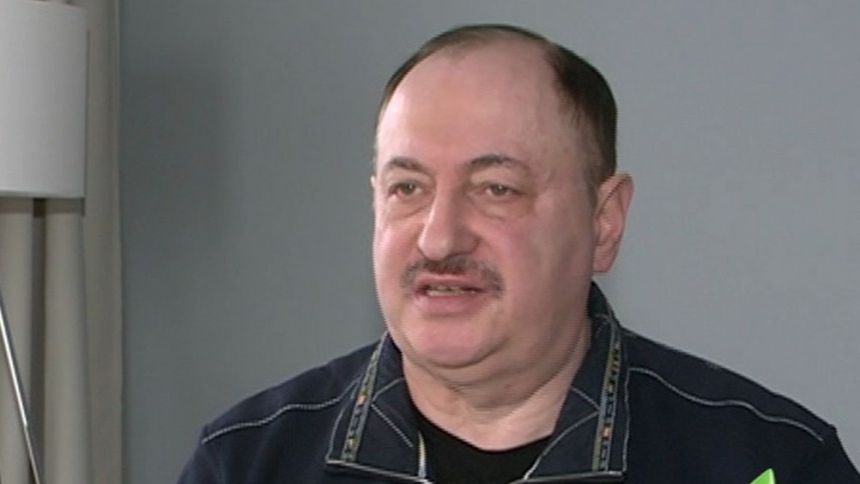
BNS was unable to reach Baukutė for comment. On Saturday she told the internet news site 15min.lt she was sorry about her behavior on the Lithuanian National Radio and Television program. “This is a normal democratic state. I think it’s allowed to make jokes. In our wonderful Lithuania these kinds of talented ethnicities may establish schools and perform in show business. This is a country which shouldn’t get hung up because of that gesture, I didn’t have that intention. There was no politics in my gesture at all. I think we can be happy that such things as Jew-baiting do not happen in Lithuania. If someone wants to create a conflict, which I certainly do not, and if someone perceived a bad subtext, I truly apologize,” the actress told the news site.

Lithuanian National Radio: Slobodka

lrtradijas

The Lithuanian National Radio and Television radio program Radijo dokumentika [Radio Documentary] for Sunday, January 8, rebroadcast Tuesday, January 10 after the morning news program at 9:00 A.M. The small area at the confluence of the Neris and Nemunas Rivers created by the Radziwiłłs in the 17th century, Slabada, a “serfdom-free zone,” was originally smaller and is called a village in the documentation, but by the second half of the 18th century the shtetl was a competitor in arts and crafts and trade with the city of Kaunas across the rivers. Industry developed quickly in the 20th century. Slobodka, as it came to be called, was the home to the world-famous Slobodka Yeshiva. Known in Lithuanian as Vilijampolė, the city on the Viliya River [a synonym for the Neris], the district became part of the city of Kaunas before World War II.

This is the eighth episode in a series dedicated to the Jewish shtetls of Lithuania in Lithuanian National Radio and Television’s retrospective on the forgotten past of the Jews of Lithuania.

Lithuanian Political Illusions: The “Policy” of the Lithuanian Provisional Government and the Beginning of the Holocaust in Lithuania in 1941

The Lithuanian Jewish Community is publishing a series of articles by the historian Algimantas Kasparavičius, a senior researcher at the Lithuanian History Institute.

kasparavicius

Part 1

In Lithuanian historiography and in the public socio-cultural discourse, Lithuania’s greatest tragedy is often considered the Soviet occupation of 1940, which quickly turned into annexation and the loss of statehood. While not denying the historical significance of this catastrophe for modern Lithuanian statehood, considering the wider and deeper historical view, this is not entirely fair or moral historically. The greatest 20th century tragedy really came upon Lithuania not in June of 1940, when freedom and statehood was lost, but a year later when the Holocaust began in Nazi-occupied Lithuania. The greatest 20th-century tragedy for Lithuania is the destruction of the Jewish community which had lived for half of a millennium and had created a civic Lithuanian identity. Even the loss of national statehood is not an irreversible process, as shown by the experience of many peoples. When a nation loses statehood during critical historical circumstances, after the geopolitical situation changes for the better it is possible to restore it. That’s what Lithuania did as well on March 11, 1990. But the former Lithuanian Jewish Litvak community, rich in all senses, will never be restored, unfortunately. And that can only mean one thing, that our Lithuania, which for many Lithuanians still represents, as Dr. Jonas Basanavičius said, “the home of the people,” will remain diminished, darker, emptier, weaker and more fragile. In terms of civilization. Emotionally. Culturally. Demographically. Geopolitically.

What We Lost in WWII

by Marius Debesis
15min.lt

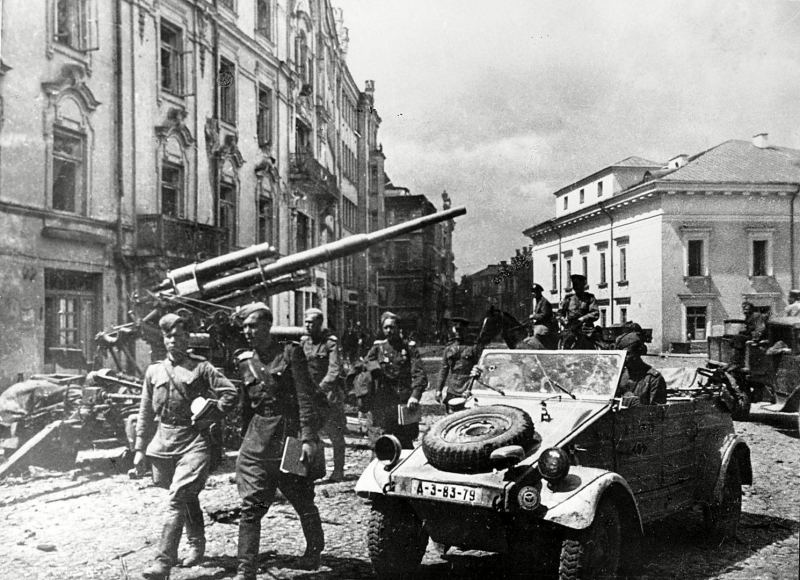
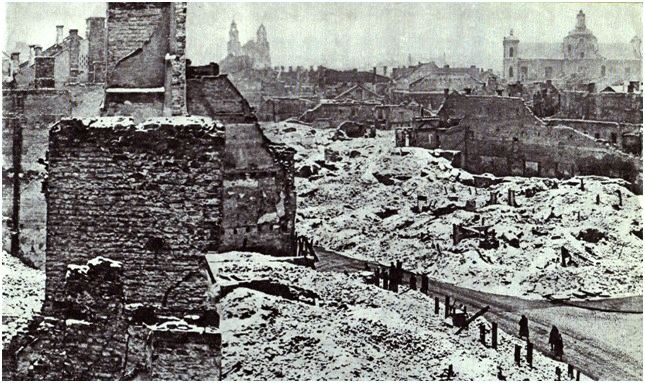
You could characterize Vilnius today as a city emerging from post-traumatic stress syndrome, covered with the wounds of war still visible to the naked eye, or sometimes only visible under profound examination, scars testifying to the city’s losses, slicing through the street plan but every year receding into the distance, into oblivion. To really understand Vilnius, one must consider the totality of losses, summing up what the capital lost during the war.

vilnius-1944-58653a4296640

Walking through the city looking for the “heritage” of the war, it’s useful to define several categories for what the Lithuanian capital lost during the war. The one to begin with is not cultural, but rather personal losses, from the loss of people who were an indivisible part of the city of Vilnius. Consider the most painful loss—the Holocaust of Vilnius Jews, which deprived the city of one of its greatest portions of identity, so significant that in Jewish culture Vilnius was bestowed the title of Jerusalem of the North. Although this text talks mainly about Jews, death hovered above everyone in Vilnius without regard to social status or religious or political conviction.

mazasis-getas-vilnius-po-58653a4459f50

Full story in Lithuanian here.

Condolences

News of the unexpected death of Ruvinas Taicas has reached the Lithuanian Jewish Community. He was born May 19, 1950, and passed away January 4. Our deepest condolences to his family and many friends.

Ruvinas Taicas, a Litvak with deep family roots in Ukmergė (Vilkomir), was one of the last native Jews in his hometown where he spent his entire life, working for many years in a furniture factory.

The entire Community mourn his loss and send our condolences to his widow Fausta, sons Artūras and Mantas, his brothers and all his relatives, friends and colleagues. We wish you strength and fortitude in overcoming the pain of our shared loss.

Shalom (from Birzh)

birzu-ugniag-768x478
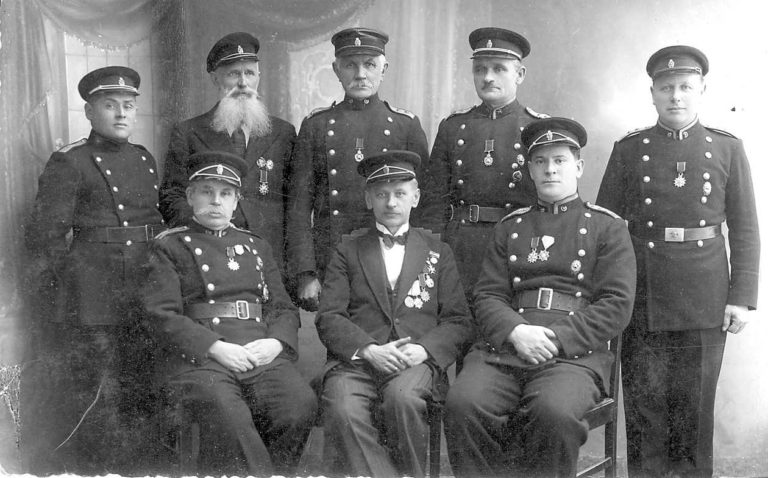
Executive board of Association of Biržai Firefighters, 1936. First person sitting on left: Boruch Michelson. Third seated from left: G. Belickas. First standing from left: S. Chaitas. Fifth from left standing: I. Masas. Photo courtesy Sėla Museum.

by Borisas Januševičius

This is a greeting among Jews. It is the wish for peace, spiritual peace and security. Lithuanian “sveikas” corresponds to “shalom aleichem,” peace to you [sic]. I heard these types of greetings often in my childhood. Parents—neighbors, Jews—of my friends (in Jewish jargon khebra: meydal and bakhur) used to use them. We also used this jargon, Kučinskų Aliukas, Kėkštų Zenka, Karpuškų Liolė and others, including me. Our chebra, our friends of darker extraction have been lying in the ground in Pakamponys for 75 years now. Their memory is fading fast into the past.

Conflicted Thoughts against the Backdrop of Noble Action

For some time now I have been watching the burgeoning interest in the Jews who lived so numerously in Biržai between the wars. Their mysterious codes are deciphered, projects are planned and carried out and the attempt is made to provide a background of international significance to this activity. The Israeli ambassador, the deputy US ambassador, Lithuania’s chief rabbi [sic], the chairwoman of the Lithuanian Jewish Community, the president of the Brooklyn Synagogue, Lithuanian members of parliament, Kaunas archbishop Lionginas Virbalas, representatives of the Jewish communities of certain cities and many others all rushed to Biržai. The men of Biržai donned Jewish “yarmulkes.” The sorrowful hymn of the cantor rang out across the Jewish cemetery. Some of the guests only then learned that there is a place called Biržai in this world with its unique Jewish and Karaite cemetery.

Unfortunately, Sheftel Melamed was not among those who turned, who used to call himself the only surviving Jew in Biržai. Melamed died more than a year ago. Sheftel and his brother went to Russia in June of 1941 and that’s how they survived. When he came to his hometown in 1945 he didn’t find his parents’ home on Vytauto street, it had burned down. Neither did he find the relatives he had left here four years earlieir. His mother Paya, his father Peisach and his brother Hirsh were shot in Pakamponys.

Full story in Lithuanian here.

Kaunas Jewish Community Celebration

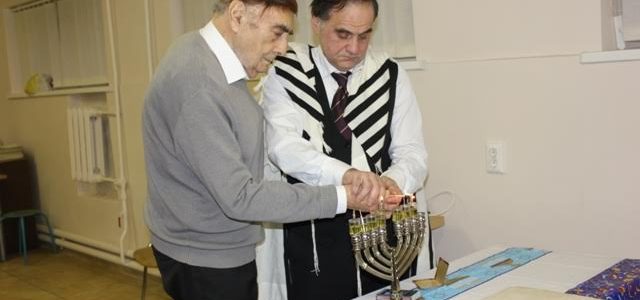
The Kaunas Jewish Community send their greetings for the New Year and Hanukkah, both of which members celebrated at a number of locations in Kaunas.

kaunm21

Festivities included lighting candles together, a violin and saxophone concert, a pancake-eating contest and potato pancakes and doughnuts for all.

Holiday celebrations were organized using Goodwill Foundation and LJC Social Program funds.

Challenges of History after the Hanukkah Miracle

ausra-pozeraite

Dr. Aušra Pažėraitė

The discussion rages on on the social networks about the wisdom or folly of lighting large menorah displays in non-Jewish cities, whether or not to say the blessing, and how much authentically Jewish is really left in the holiday of Christmukkah, as images of square and overturned Christmas trees with branches forming menorahs are exchanged. In respect to all this, we could turn back again to the historical opposition between Greek and Jew and the Jewish victory. The more salient aspect today, though, having in mind the different possible interactions of a religious or ethnic minority with the dominant host culture, is the history of what happened “Post-Hanukkah.”

It’s ironic that, as researcher Erich Gruen points out, after the Hasmoneans won the independence of the state of Judea and established a royal dynasty, and after they established the Torah as the law of the land (or constitution), the Hellenization of the country only increased, and accelerated throughout the period of the kingdom. Martin Hengel also believes the Judaism of Judea in the period was highly Hellenized, although he tries to frame it within “the conflict between the Judaism of Palestine and the spirit of the age of Hellenism” and is forced to explain the crisis of the Maccabee era did lead to a reaction in Judea which put a halt to syncretism, channeled intellectual activities to Torah study and blocked any criticism of the cult and the law. As many authors note, the influence of Hellenism in Judea is obvious, while literature written in the Land of Israel clearly differs from that written in the Diaspora. There Hellenistic literature was neither completely assimilated, nor was it entirely rejected. (As an analogue one might think about contemporary Israel which includes a completely modern secularism differing in none of its essentials from that of the West, and also extremely segregated religious communities.)

Historian Louis H. Feldman presents different artifacts discovered by archaeologists in the Land of Israel from Hellenistic times. Among them are representations of different Greek gods and figures in synagogues, private homes and other locations. Feldman says, based on Rab Gamaliel (first century CE) in the mishnah tractate Avoda Zara, the rabbis of the period weren’t frightened of the pagan deities and didn’t believe they could somehow engage Jews in the pagan cults. Gamaliel says the bath h went to was not the ornament of Aphrodite, but on the contrary, Aphrodite was the ornament of the bath, a mere decoration. This view might have been the one prevailing among the sages of Judea at the time, namely, that the use of Greek gods and other Greek elements in daily life was a degradation of these gods, in modern terms perhaps their “commodification,” and in no way their worship. Feldman shows third-century rabbi Yohan was likewise unopposed to mosaics portraying Aphrodite.

Remembering Osip Mandelstam, Litvak Poet, 125 Years after His Birth

Šiemet minimos 125-osios garsaus poeto, litvako Osipo Mandelštamo gimimo metinės

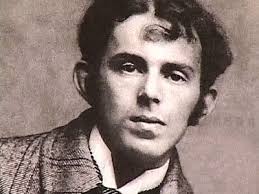
This year marks the 125th anniversary of the birth of famous Litvak poet Osip Mandelshtam. At the LJC’s Mini Limmud conference held in November, one of the lectures was dedicated to the work of the famous poet. The lecture was by Ellena Suodienė, who is the author of 16 books of poetry and defended her doctoral thesis on the Russian poetry of Marina Tsvetaeva. Suodienė was awarded the Golden Quill diploma of the European Arts and Literature Institute and taught at the Kaunas Liberal Arts Faculty of Vilnius University until the year 2000. She published three books of poetry while she was teaching. She is the currently the hostess of the Nadezhda Russian Meeting Club in Kaunas. Suodienė has dedicated much of her time and research to the life and work of Osip Mandelstam and even wrote a poem about him.

On the 125th anniversary of his birth we are again reminded Osip Mandelstam is one of the most famous Litvaks on the world stage. Many remember him as a brilliant poet who suffered under the persecution of the Stalin regime. Suodienė calls him a martyr to poetry.

Holiday Greetings from Gediminas Kirkilas

kirkilas-page-0-1

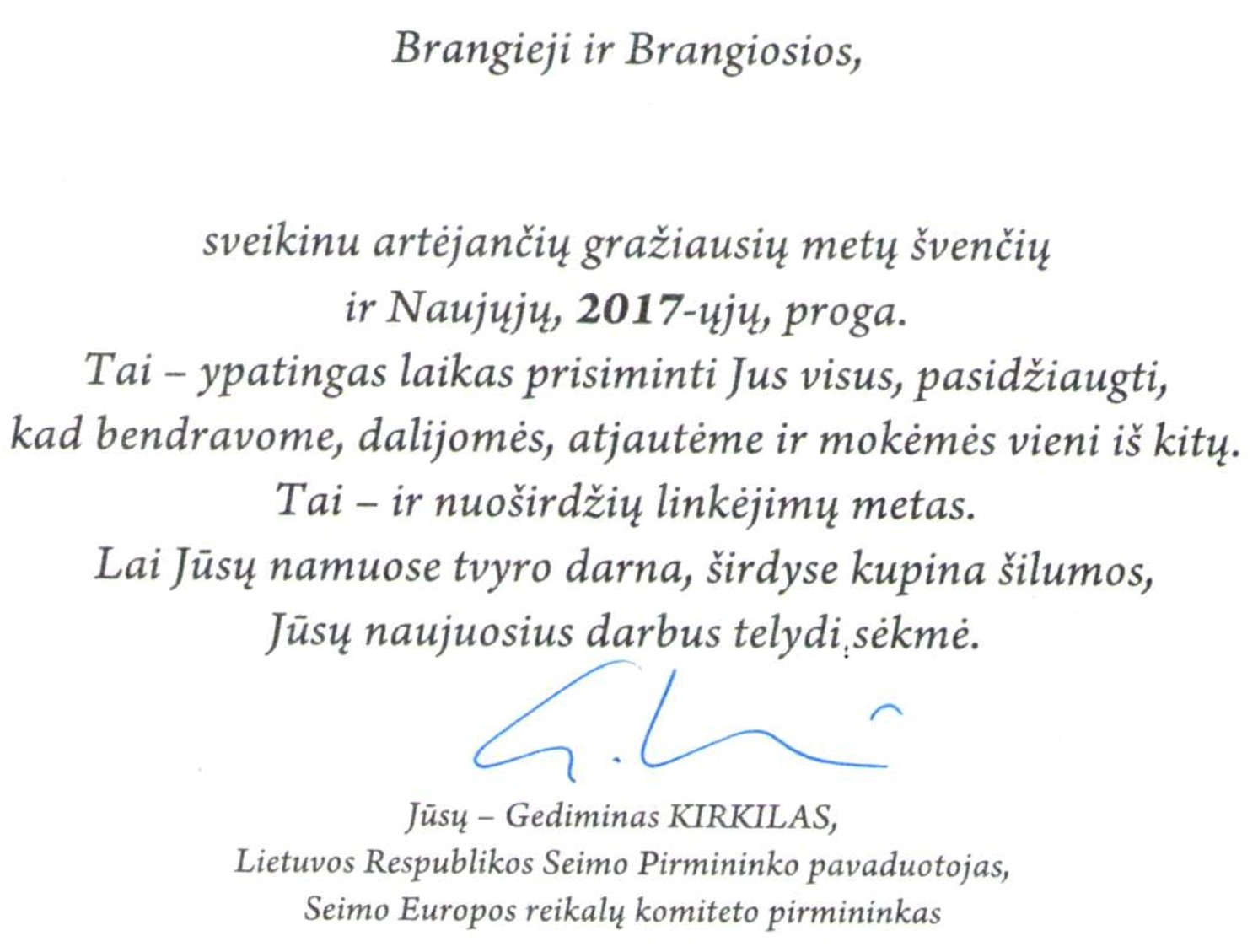
Deputy speaker of parliament and former prime minister Gediminas Kirkilas sends holiday greetings to the Lithuanian Jewish Community. Unofficial translation:

Dear ladies and gentlemen,

I greet you on the occasion of the coming holiday, the most beautiful holiday of the year and the coming New Year, 2017. This is a special time to remember all of you, to take joy in our having spoken, shared, sympathized and learned from one another. This is a time for sincere and heartfelt greetings. May harmony prevail in your home, may your hearts be filled with warmth and may success follow upon your new endeavors.

Yours,

[signed]
Gediminas Kirkilas,
deputy speaker,
chairman of the European Affairs Committee
Lithuanian Parliament

Discover, Recognize, Accept

One beautiful December afternoon director Vida Pulkauninkienė and members of the Dukstyna Tolerance Education Center travelled to Vilnius to meet with Jewish Community member Geršonas Taicas. The knowledgeable Taicas took them on a tour of the Vilnius Old Town and told them about famous Jewish personalities.

During the walking tour Taicas took them to the remnants of the old city wall where in the early 17th century the Bastillion was built at the Subocz Gate. This is a defensive fortification consisting of a tower, an artillery section and a tunnel connecting them. From there they walked to a location where the city and its surrounding areas are clearly visible and took in the view.

On Strazdelio street they saw the building where the Romm publishing house operated.

They also saw the building where Jascha Heifetz, the famous 20th century violinist, studied.

New York Times: Ponar Top Science Story in 2016

17yearend-ponar-jumbo
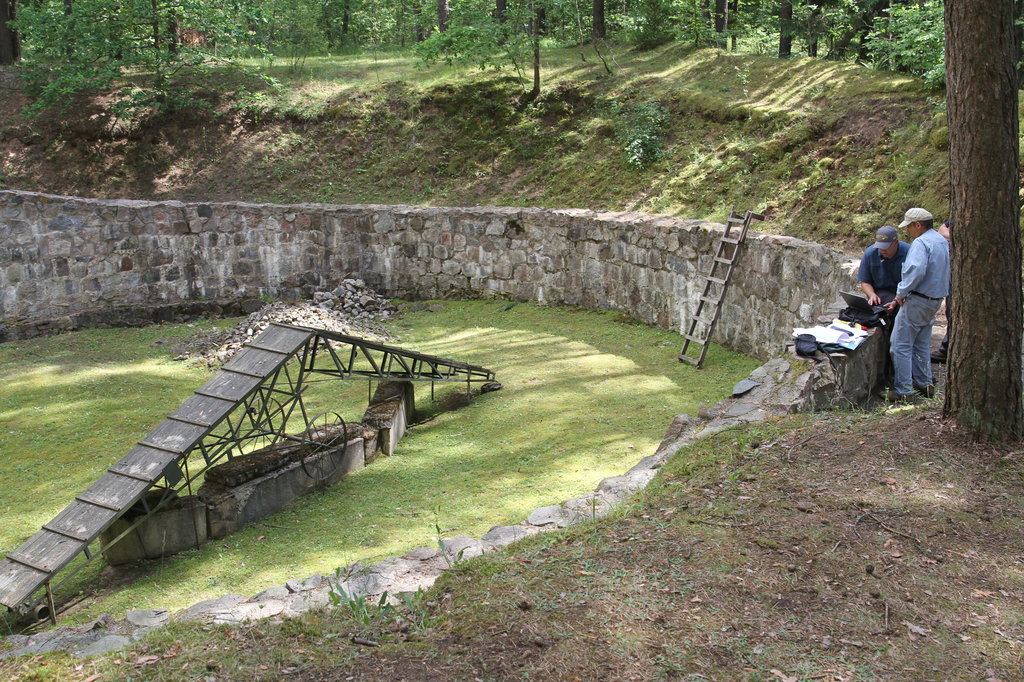
Jewish forced laborers dug a tunnel from this holding pit near Vilnius, Lithuania, into the surrounding forest. Photo: Ezra Wolfinger for NOVA

In a look back at the top science stories of 2016, the New York Times science desk included non-invasive archaeology last summer at Ponar outside Vilnius. In “Evidence of a Great Escape” (not to be confused with The Great Escape at Stalag Luft III in Poland), New York Times science writer Nicholas St. Fleur talks about the discoveries made there.

§§§

In 1943, the Nazis forced 80 Lithuanian Jews to dig up the rotting bodies of their murdered neighbors, pile them on top of wood and burn them.

They were then ordered to mix the ashes with sand and bury the remains so no one would know of the atrocities committed at Ponar, an extermination site where the Nazis executed more than 100,000 people.

Panevėžys and Ukmergė Jewish Communities Celebrate Hanukkah

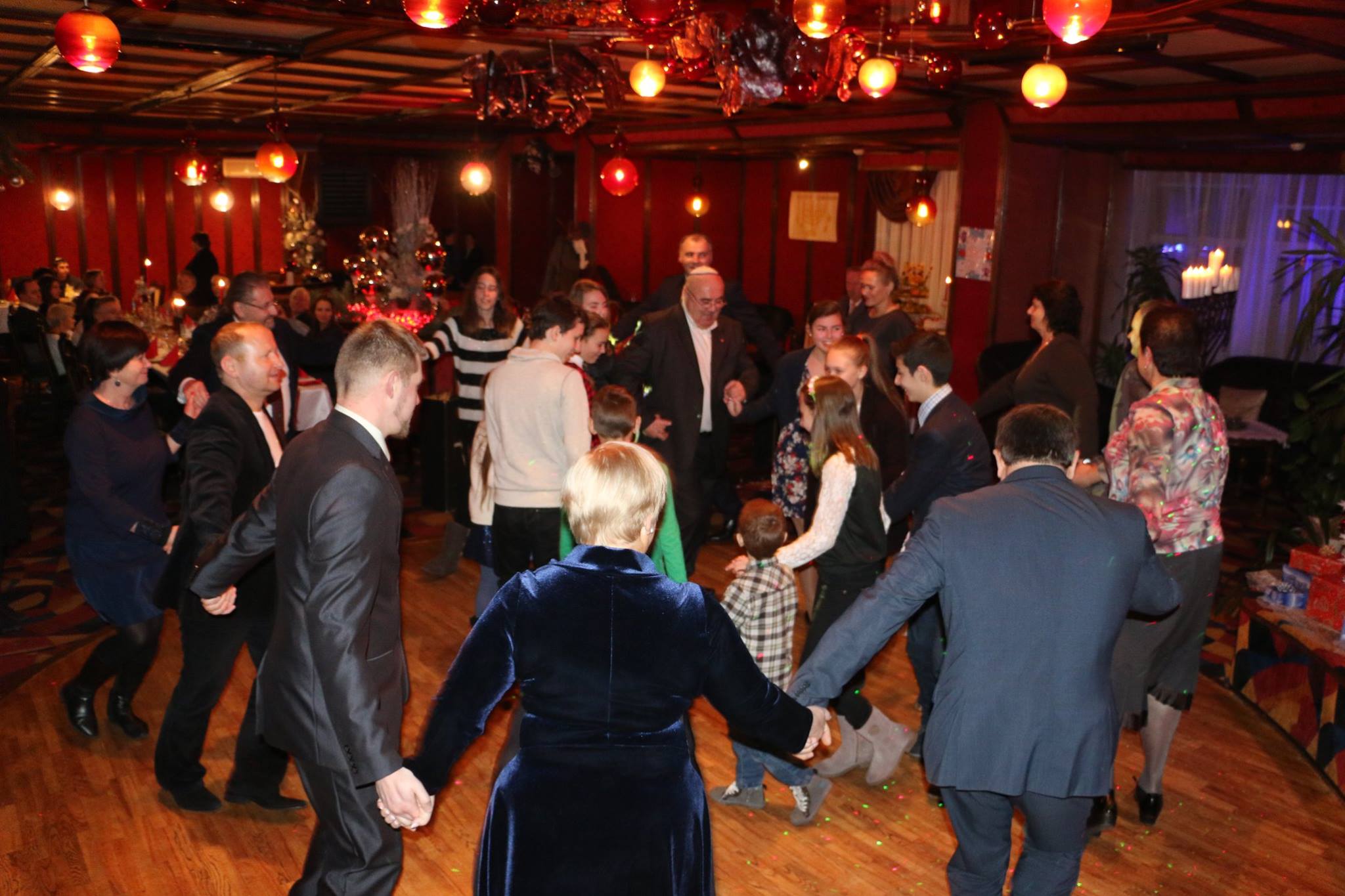
On December 30 the Panevėžys City and Ukmergė Regional Jewish Communities celebrated Hanukkah together at the restaurant Vakarinė žara, where they have held such celebrations for several years now. The event was heavily attended by members of both communities, their families and honored guests, including Panevėžys mayor Rytis Račkauskas, Panevėžys Jewish Community patron Yuri Grafman, the historian Vidmantas Janukonis and city council members Galina Kuzmienė and Alfonsas Petrauskas, among others. Attendees appeared to have a wonderful time and there was much conversation and many greetings. Participants enjoyed traditional Hanukkah treats including latkes and doughnuts.

ukmcha7

Hanukkah at Choral Synagogue

Chanukos šventė Vilniaus Choralinėje sinagogoje 2016

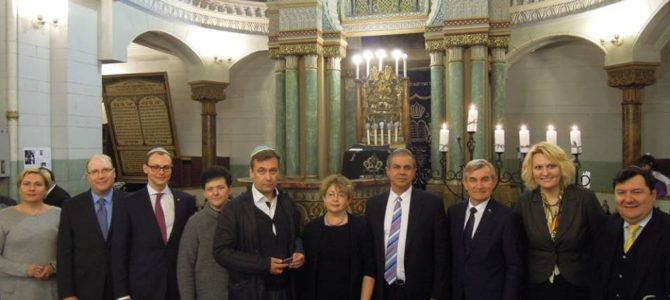
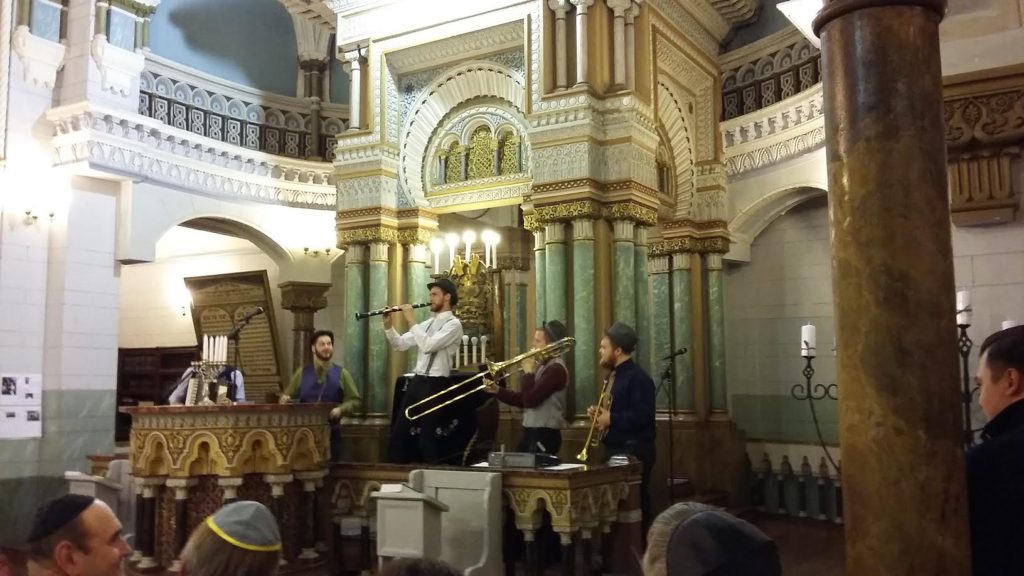
The Hanukkah celebration at the Choral Synagogue in Vilnius yesterday was both moving and fun with many esteemed guests and traditional Hanukkah foods including latkes and doughnuts. A warm and happy atmosphere prevailed and the klezmer group Rakija Klezmer Orkestar contributed to the festive mood with great performances of Jewish song. Lithuanian Jewish Community chairwoman Faina Kukliansky greeted celebrants of the Hanukkah miracle. The miracle of this year’s Hanukkah, she said, was Lithuanians celebrating the Jewish holiday with Jews at the synagogue and Lithuanians and people of other ethnicities performing Jewish music there. It is a blessing to be able to celebrate together with the Jewish community in one’s own land, she said.

Lithuanian parliamentary speaker Pranckietis, Israeli ambassador Amir Maimon, Lithuanian ambassador to Israel Bagdonas and US embassy deputy chief of mission Solomon attended.

chanukas3

Snapshots available here.

Video footage available here and here courtesy of Amit Belaitė.

Hanukkah and the Light of the Torah

ausra-pozeraite

Dr. Aušra Pažėraitė

The Talmud (Shabbat 21b) speaks rather laconically of the origins of this holiday:

“Kislev 25, the days of Hanukkah which are eight, there is no mourning, there is no fasting during these days. When the Greeks came into the Temple, they polluted all the oil in the Temple, and when the Hasmonean dynasty overcame and defeated them, they checked [the Temple] and found just one jug of oil, which was in its place, and was sealed with the seal of the High Priest. But in it there was oil [only sufficient] for burning for just one day. A miracle occurred in connection with it: it burned for eight days. The next year they established them [these days] as holy days for giving glory (hallel) and thanks.”

The retelling isn’t as comprehensive as found in the Christian Bible where the two Books of the Maccabees written in Greek are found. They tell a longer story of Jewish persecution during the reign of the Hellenistic king of Syria Antiochus Epiphanes, the Jewish revolt under the brothers Maccabee and their victory. The Greek telling is full of rhetorical details speaking to how widespread Greek culture had taken root throughout the nation, even among the priesthood of the Temple in Jerusalem: “Now such was the height of Greek fashions, and increase of heathenish manners, through the exceeding profaneness of Jason, that ungodly wretch, and no high priest; That the priests had no courage to serve any more at the altar, but despising the temple, and neglecting the sacrifices, hastened to be partakers of the unlawful allowance in the place of exercise, after the game of Discus called them forth; Not setting by the honors of their fathers, but liking the glory of the Grecians best of all” (2 Maccabees 4:13-15). Athletics were practiced in the nude, and so displayed the evidence of circumcision, which caused shame, since it didn’t fit with the Greek ideal of manly virtue, kalokagathia. It tells how the Temple was looted and desecrated, and renamed Jupiter Olympus. Demands by the “Greek” regime to violate the Torah are also enumerated, and the story of the martyrs who refused to do so is provided. Many of the details of the stories are unclear to historians, but a general picture of the times is more or less provided. And this includes not just the brutal actions of the Hellenistic regime, but also the attraction and endless temptation Hellenistic thought and the Hellenistic lifestyle exerted.

Respect for Ethnic Community Heritage Successful Element of Integration

montvydaite

The Ethnic Minorities Department under the Lithuanian Government held a discussion called “Respect for Ethnic Community Heritage a Successful Element of Integration” just before Christmas where heritage specialists, representatives of Lithuania’s ethnic minorities and members of the press discussed ethnic heritage.

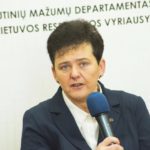
Ethnic Minorities Department director Dr. Vida Montvydaitė opened the discussion noting the topic of heritage unites all of the country’s communities and associations.

varnaite

Diana Varnaitė, director of the Cultural Heritage Department under the Lithuanian Ministry of Culture, said Lithuania’s cultural heritage is reflected in the country’s ethnic associations and their stories in the context of the development of the Lithuanian state. “Our state is very rich in associations who have created symbols. The most easily and most frequently recognized ones are sacred sites,” she said, noting many associations hold dear their historical cemeteries. She said there is often a lack of knowledge preventing recognition of this diversity, so that the ethnic communities are often the best partners in heritage protection work, and that her organization has great expectations of the Ethnic Minorities Department. Varnaitė said recognition of heritage is the key to its preservation. “What we recognize, what we hold dear, becomes part of us, our communities, the ethnic associations themselves and the local communities.”

Greetings from Lithuanian Jewish Community Chairwoman Faina Kukliansky

unnamed

Dear members of the Jewish community, greetings to all on this holiday of Hanukkah!

I hope good feelings and warm and pleasant moments with loved ones will accompany you as you light the first Hanukkah candle. I wish you health and concord in your family, and that our children would grow up safe, dignified and happy and be proud of their parents and their roots.

It is a happy thing that there is ever-growing interest in the rich history of the Jews, and I probably won’t be making a mistake to say that there was never so much interest in the Jewish community as there is now, although so few Jews are left in Lithuania. The Jewish Community works actively to insure the rights and freedoms of our members and to promote Jewish interests. Unfortunately we weren’t able to achieve all our goals in 2016, but we will continue to strive after them in the coming year: monuments to those who shot Jews need to be removed, and Vilnius needs to have a monument commemorating those who rescued Jews from the Holocaust. We will continue to work on the issue of restitution of private property.

The Jewish Community is investing in the future, issuing scholarships and stipends for Jewish students and accomplished athletes. Plans for a new kindergarten have been completed, a kindergarten which will insure Jewish values are passed down to the youngest members of our community and prepare them for further education at the Jewish school.

One of the Lithuanian Jewish Community’s top priorities is to improve the living conditions of clients in our Social Programs Department. We help when emergencies and misfortune occur. This will remain our priority in 2017. We also help rescuers of Jews, whose humility and sincere gratitude encourage us to grow and improve. I would like to thank Jewish rescuer Regina for the gloves and socks she knitted.

The Community building itself has become lighter and cozier. We have new audio-visual equipment in the Community concert hall and there are always new and different exhibitions on display. It’s a great joy that there is cultural life, ferment and creativity in the community, and that performers from Lithuania, Israel, the USA, the Netherlands, Romania and other countries perform concerts here. It is also a happy occasion that we have deepened our contacts with the foreign embassies, other countries, municipal institutions and NGOs. Thanks to this cooperation legal amendments were finally adopted to make it easier for Litvaks to restore Lithuanian citizenship. We signed an agreement on cooperation with the American Jewish Committee, we are enjoying wonderful relations with other world Jewish organizations and we are expanding contacts in the West as well as in the East, with the Jewish communities in India and Japan.

Interest in religion is reviving as well. We have two rabbis working at the Community who give lessons educating young and old on various topics in Judaism.

In cooperation with international Jewish organizations and based on their recommendations, we have increased security at the Community and synagogue buildings, and are approaching western standards of security.

We have the only kosher café in Vilnius. The Bagel Shop has attracted significant attention and television crews from Canada, Germany and of course Lithuania, too, have featured the café. It has become a place where not only Jews gather, but also aficionados of Jewish cuisine and culture. Our challa-baking event was a good time for all, and US ambassador Anne Hall was enchanted by the experience. The Jewish languages project carried out with the Cultural Heritage Department attracted much attention by many residents of the Lithuanian capital and visitors from elsewhere. In greeting you all, I invite Community members to show even greater initiative and self-confidence in proposing ways to make their hopes and dreams come true, because the Community exists to benefit its members.

My holiday greetings go out as well to Israeli ambassador Amir Maimon and the chairmen of the regional communities: Gennady Kofman, Gercas Žakas, Artūras Taicas, Feliksas Puzemskis, Moisej Šapiro and Josifas Buršteinas. Thank you all for the active roles you play and for working together.

Khag Khanuka Sameakh!

Lithuanian National Radio and Television Names Marius Ivaškevičius Man of the Year

lrtradijas-1

Marius Ivaškevičius, the writer and organizer of a Holocaust commemoration march in Molėtai, Lithuania, has been named Man of the Year for 2016 by Lithuanian National Radio and Television.

Last May Ivaškevičius published an internet appeal for the public to attend a march in his hometown along the route Jews were taken to their deaths in 1941. He followed this appeal with an essay called “I’m Not Jewish,” a translation of which attracted the most visitors to any single item on the Lithuanian Jewish Community web site ever.

Ivaškevičius’s march in Molėtai attracted international attention and dominated the Lithuanian media on August 29, 2016. About 3,000 people from Lithuania and abroad marched from the town square to the mass grave site, the same route about 2,000 Jews marched to their deaths 75 years earlier.

Lithuanian Citizenship Granted Several Hundred Litvaks after Correction to Law

BNS_logotipas

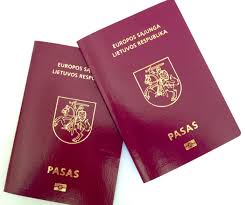
pasas-lietuvos

Vilnius, December 25, BNS–After the law was amended to provide greater opportunities to Jews who left Lithuania between the wars to restore citizenship, several hundred requests for Lithuanian citizenship have been granted.

The Lithuanian Migration Department reports following amendments adopted in April of 2016, Lithuanian citizenship was restored to 223 people of Jewish ethnicity through the third quarter of the year. Of these, 209 held Israeli citizenship and 14 South African. No applications were rejected. A significant portion of requests have not been processed yet, but Migration Department representatives said the trend continues for the fourth quarter and citizenship should be restored for another 200 people.

Citizenship was also granted to 36 people whose applications had been rejected earlier. Before the new law came into effect, both the number of requests granted and requests rejected were growing annually. In 2014 10 were rejected, in 2015 76, and in the first half of 2016 105 applications by Litvaks for restoration of Lithuanian citizenship were rejected. Correspondingly, in 2014 528 cases of restoration of citizenship to Jews were granted, in 2015 602, but in the first half of 2016 just 125 people of Jewish ethnicity received positive answers.

“As early as the beginning of the year we knew there would be some sort of changes, so we froze potentially negative decisions. When the new law was adopted, we renewed the frozen cases, so that perhaps explains why the positive decisions increased. But there is no flood,” Migration Department director Evelina Gudzinskaitė told BNS.

She said there are three main reasons Litvak descendants seek Lithuanian citizenship. “For some there is a symbolic tie to Lithuania, they want to restore citizenship, to have it, they want to maintain their roots. For some they need it for practical reasons, they want to come back here, they’re involved in cemetery protection, restoration of synagogues, they are concerned with heritage which still survives here, they want to visit [heritage sites]… A Lithuanian passport is also citizenship in the European Union, so there’s the opportunity to arrive in the EU, to travel more easily,” she commented

In April the law was changed to make it more explicit, following a new procedure by migration officials and courts demanding Litvaks provide proof they or their ancestors were persecuted in Lithuania during the period between the two world wars. The matter revolved around a nuance in meaning, between the words “fled” and “withdrew.” Both cases are now covered in the new language.

First Hanukkah Light Lit at Lithuanian Jewish Community

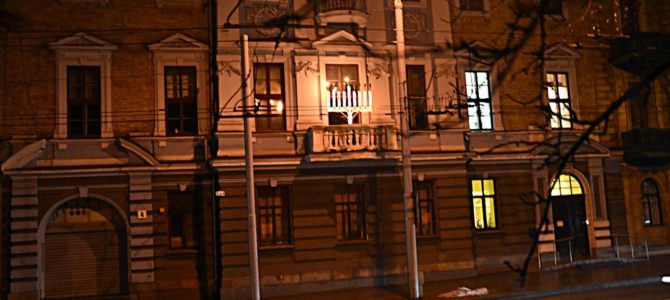
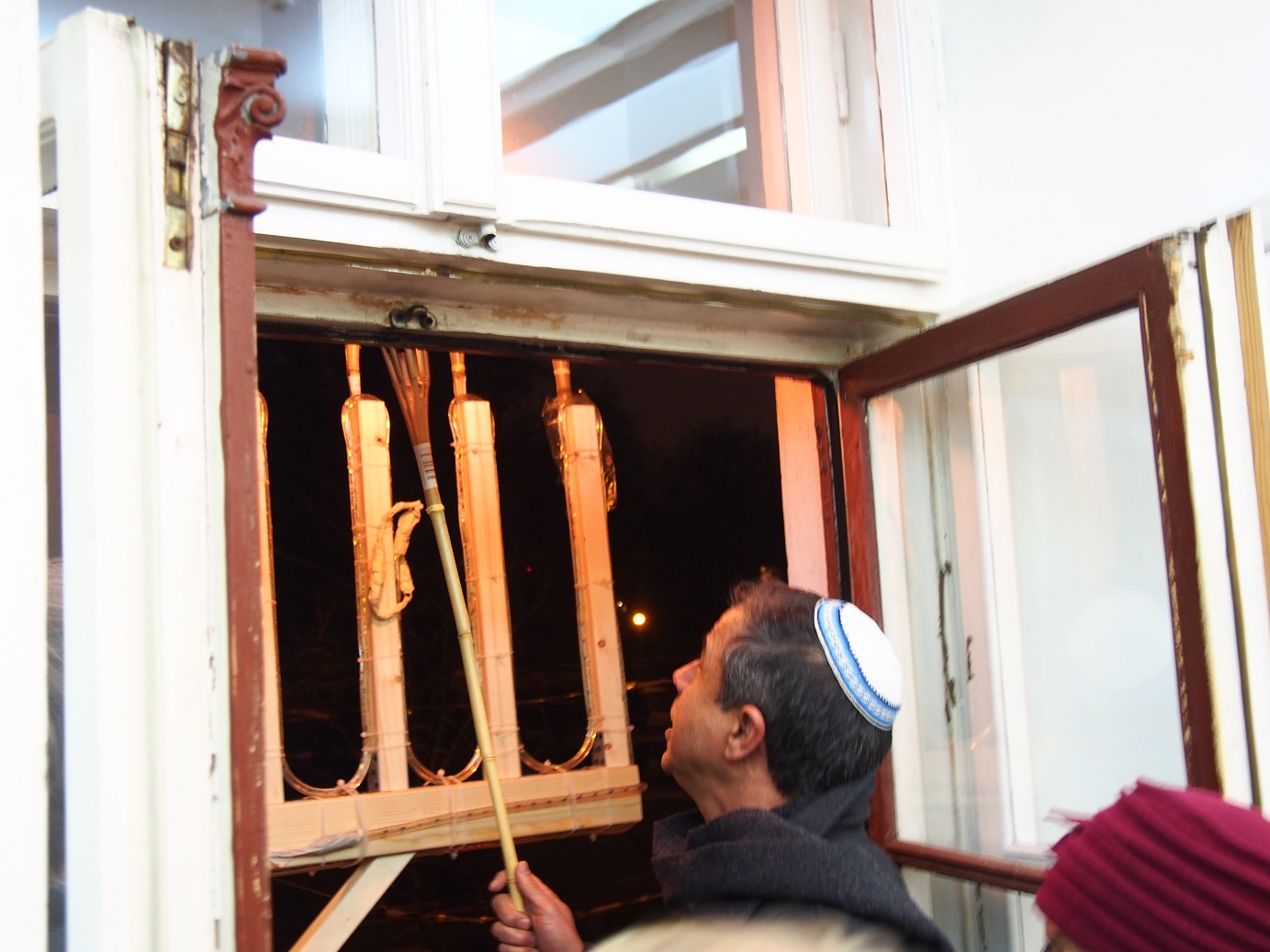
Israel’s ambassador to Lithuania Amir Maimon and Lithuanian Jewish Community chairwoman Faina Kukliansky lit the first Hanukkah candle on a menorah on the balcony of the Community building in Vilnius Saturday night. Vilnius Choral Synagogue cantor Shmuel Yatom added to the beauty and dignity of the ceremony with his performance of a hymn.

OLYMPUS DIGITAL CAMERA

Saturday evening, December 24, marked the beginning of the Hanukkah holiday. Hanukkah is always celebrated for eight days, beginning on the 25th day of Kislev on the Jewish calendar. The word itself is often explained as coming from a root for inauguration, consecration and dedication.