

Things Tell Stories: National Conference by Schools for Holocaust Day


Balbieriškis Primary School, Klevų street no. 10, Balbieriškis, Lithuania
January 27, 2017
Conference program:
10:00-11:00
arrival, registration
11:00-12:00
opening, principal Stasys Valančius and International Commission executive director Ronaldas Račinskas
Radio Documentary: Lost Traces of Vilkaviškis
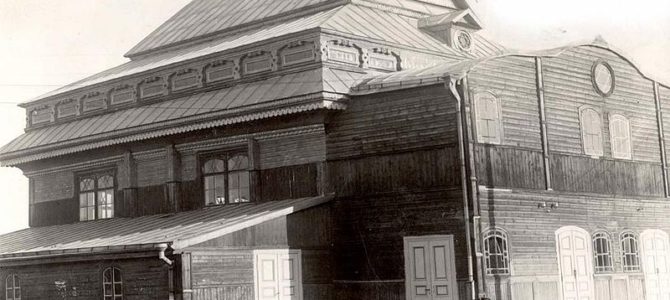
Vilkaviškis synagogue

The Lithuanian National Radio program Radijo Dokumentika aired the episode on at 11:05 A.M. on January 22. It is to be rebroadcast at 9:00 A.M. on January 24 just after the morning news program Ryto Garsai.
Feiga Koganskienė, who lived in the town in the Suvalkija region right up till World War II, says: “Vilkaviškis is only the name Vilkaviškis, it has nothing in common with the former Vilkaviškis.” When she returned to her home town after the war, the woman did not recognize it, and found none of her Jewish family or friends.
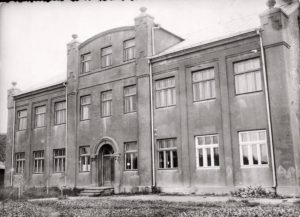
The modern Vilkaviškis Jewish Gymnasium between
the wars, now the city municipal building.
Before the war Vilkaviškis was one of the most ethnically and culturally diverse towns in the region, but now it’s perhaps the most Lithuanian town in the entire country. Today only a handful of people remember Vilkaviškis in the interwar period, and even fewer are prepared to look into the town’s Jewish history. In the Lost Traces of Vilkaviškis episode, Radijo Dokumentika reporters walk with residents for whom the Vilkaviškis of that time is not just a collection of faded facts from history.
Lithuanian Jews behind the Iron Curtain: An Exhibit in Tblisi
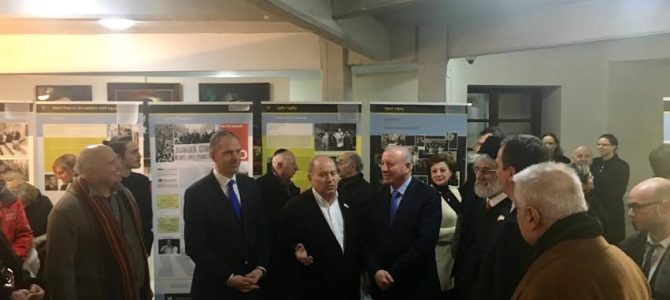
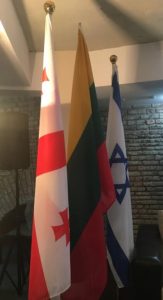
The David Baazov Museum of the History of the Jews of Georgia opened an exhibition January 18 called “Lithuanian Jews behind the Iron Curtain” about the Lithuanian Jewish community during the initial Soviet occupation of Lithuania in 1940. Members of the local Jewish community, diplomatic personnel and lovers of history were invited to attend the opening of the moving and historically informative exhibition of photographs and historical documents. Lithuanian ambassador to Georgia Giedrius Puodžiūnas and Tblisi Jewish Community chairman Jamlet Khukhashvili opened the exhibit and the Georgian minister of culture, the minister of reconciliation and civil equality and the Israeli ambassador spoke. The main focus of the exhibit was on individual efforts to resist restrictions on freedom, identity and historical memory. The exhibit is based on primary sources and items from the Vilna Gaon State Jewish Museum, documents from the Lithuanian Central Archives, the Lithuanian Special Archives and personal collections. The exhibit was prepared by the Vilna Gaon museum in Vilnius, Lithuania.
Lithuanian Political Illusions: The “Policy” of the Lithuanian Provisional Government and the Beginning of the Holocaust in Lithuania in 1941
The Lithuanian Jewish Community is publishing a series of articles by the historian Algimantas Kasparavičius, a senior researcher at the Lithuanian History Institute.
Part 3
As shown by rather abundant surviving archival sources, memoirs and historiography, the pro-German (more accurately pro-Nazi, since in principle there existed no other Germany at that time operating in the international arena as real geopolitical power) concept and strategy of liberation from Soviet occupation and annexation and restoration of the Lithuanian state [1] began to form during the first days of the Soviet occupation, i.e., the end of June, 1940, mainly at the initiative of Lithuanian diplomat in Berlin colonel Kazys Škirpa, who, for several years, had maintained good and even friendly relations with high Nazi Party figures [2]. The process accelerated immediately upon the annexation of Lithuania. As Stalinist repression growing into state terror and radical socio-political reforms took hold in Lithuania [sic]. An organized anti-Soviet resistance quickly began to coalesce by early October of 1940 in Kaunas. The main author of this strategy and its main ideologue, however, was none other than Lithuania’s long-time military attaché in Berlin, colonel Kazys Škirpa. [3] It was at his initiative and due to his efforts that the Lithuanian Activist Front was established in Berlin on November 17, 1940. The LAF established headquarters in Lithuania in Kaunas and Vilnius. Besides Škirpa, the main LAF figures in Berlin and Lithuania were E. Galvanauskas, Klemensas Brunius, Antanas Maceina and Karolis Žalkauskas, Leonas Prapuolenis, Vytautas Bulvičius, Juozas Kilius, Adolfas Damušis, Jonas Pajaujis, K. Antanavičius, J. Vėbra and others. [4]
In cooperation and consultation with German/Nazi political, military and diplomatic figures–field marshals Wilhelm Keitel and Walter von Brauchitsh, chief of the Abwehr admiral Wilhelm Canaris and Abwehr agent in charge of contact with Baltic anti-Soviet resistance organizations lieutenant colonel Herman Gräbe–a program began to be drafted for liberation from Soviet occupation and annexation. Methods, tactics and political strategy for Lithuanian partisan warfare and insurgency against the Soviets were developed. [5]
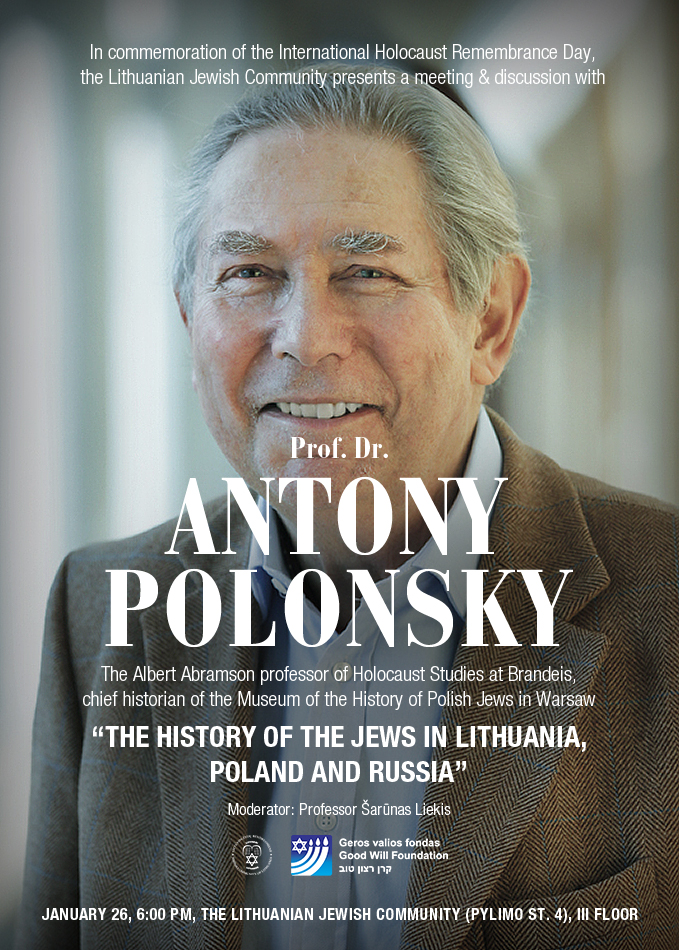
Holocaust Remembrance Day with Dr. Antony Polonsky
You’re invited to a public meeting and discussion with Dr. Antony Polonsky (the Albert Abramson professor of Holocaust Studies at Brandeis and the chief historian of the Museum of the History of Polish Jews in Warsaw) called The History of the Jews in Lithuania, Poland and Russia at 6:00 P.M. on Thursday, January 26, in the Jascha Heifetz Hall on the third floor of the Lithuanian Jewish Community (Pylimo street no. 4, Vilnius).
Moderator: professor Šarūnas Liekis.
A Mekhaye Winter Children’s Camp 2016
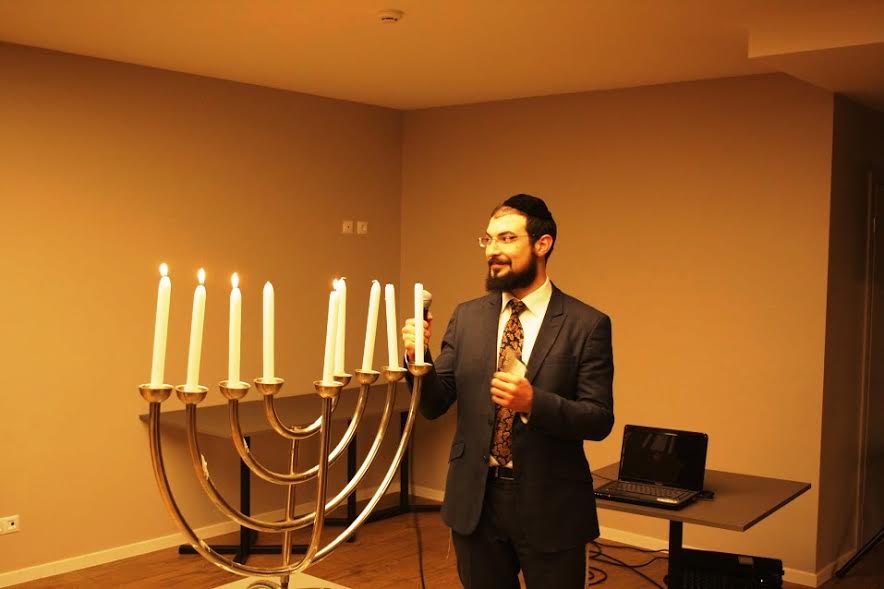
The Lithuanian Jewish Community and the Joint Distribution Committee traditionally hold the A Mekhaye winter camp for Children and did so late last year in 2016 as well. The camp is held in Dubingiai, Lithuania. It usually includes about 90 children who spend the holiday period together. This year as in earlier years we assembled a great team, people who know their work and who have been part of camp staff for several years now.
This year the theme was “Hanukkah in the shtetl,” since the camp coincided with the holiday. Each day camp counselors introduced a new topic and taught the children about it. Besides just being fun, the camp is very educational, even if information comes through games, as it often does. The children and staff say they feel right at home in Dubingiai now, as if it were their second home.
Lithuanian National Radio and Television Hosts Exhibit on Righteous Gentiles
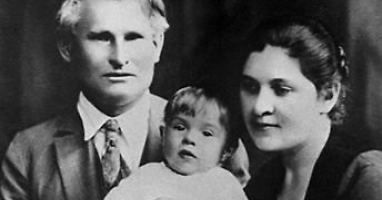
An exhibit of photographs of upstanding and courageous Lithuanian Righteous Gentiles who rescued Jews from the Nazis, performing the highest service to their nation, will open at the Lithuanian National Radio and Television Gallery at Konarskio street no. 49 in Vilnius at 3:00 P.M. on Thursday, January 19. The Yad Vashem Holocaust memorial authority and museum in Israel bestows the title Righteous among the Nations, or Righteous Gentile, on citizens of other countries who rescued Holocaust victims. This exhibition was shown earlier at the Lithuanian parliament. As readers will recall, the Lithuanian Jewish Community’s annual calendar features Lithuanian Righteous Gentiles this year as well, with a photograph of Lithuanian president Kazys Grinius and wife Kristina on the cover.
Writer Icchokas Meras, the winner of the Lithuanian National Prize for Art and Culture who was saved from the Holocaust by Lithuanians, wrote about the rescuers: “They were the blooms of the morality of the nation, the spiritual giants of the nation, no matter whether they were educated or simple people, whether they were illiterate, clergy who carried with them the true love of one’s neighbor or simple peasants broadcasting seed to the ground by hand. They, intentionally or unintentionally, opposed the destroying power of the Nazis and its tool: those who murdered. We should remember and honor their heroism based on conscience, goodness, love of one’s neighbor and simply human pity.”
Panevėžys Jewish Community to Mark International Holocaust Remembrance Day

January 27 marks the day in 1945 when the victims of the Auschwitz death camp were liberated. Auschwitz was the largest concentration camp set up by Nazi Germany where about 1.5 million people were murdered, including children, and approximately 1 million of the victims were Jews, according to the best estimates.
The Panevėžys Jewish Community will observe International Holocaust Remembrance Day on January 26 at the “Sad Jewish Mother” statue on Memory Square at Vasario 16 street next to the Vyturis Pre-Gymnasium.
Program:
2:00 P.M. Assembly, wreath-laying ceremony, speeches;
2:45 P.M. Wreath-laying ceremony at the statue “Ghetto Gate” (at the intersection of Klaipėdos and Krekenavos streets);
3:00 P.M. Forum dedicated to International Holocaust Remembrance Day at the Panevėžys Jewish Community (Ramygalos street no. 18). Documentary film about the Holocaust.
Let’s remember the heroic rescuers.
Event supporters:

Lithuanian Jewish Community Position on Reconstruction of the Vilnius Palace of Concerts and Sports and Its Use as a Conference Center
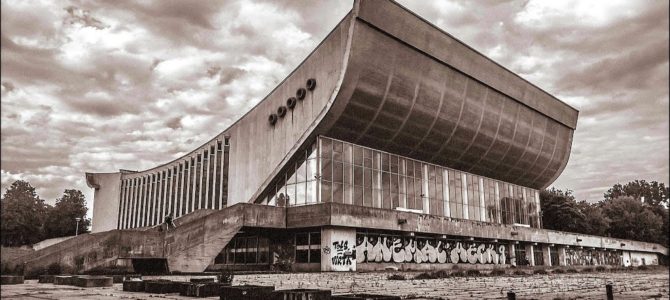
In light of the recent intensification of statements in the media on the alleged danger now threatening the conservation of the Šnipiškės Jewish graveyard in Vilnius (hereinafter Cemetery), the Lithuanian Jewish (Litvak) Community (hereinafter LJC) feel it our duty yet again to present the main facts in the case and the LJC’s well-founded position based on those facts regarding the issue of the reconstruction of the Vilnius Palace of Concerts and Sports (hereinafter Sports Palace) and its adaptation as a conference center.
1. To date no work for the reconstruction of the Sports Palace has been carried out, and therefore no possibly negative impact on the graveyard which was destroyed in the 1950s is being effected at the current time. The remains of the Vilna Gaon were removed to the Vilnius Jewish cemetery located on Sudervės street long ago and his headstone is located there.
False statements and rumors have been circulating for some time, so again it is necessary to explain the headstones in the Cemetery were destroyed long ago and the Sports Palace was constructed there back in the Soviet era. At the current time only pre-planning proposals have been drawn up, which could serve later as the basis for a detailed technical project for the renovation and adaptation of the Sports Palace which will be carefully examined and assessed by competent institutions.
2. The Cemetery is entered on the Registry of Cultural Treasures and has been declared a state-protected site, meaning any construction or reconstruction work in the area of the graves or in the buffer zone around it, and any plans for this sort of work, are carefully assessed and strictly controlled under the provisions of the law of the Republic of Lithuania on protection of real estate heritage and the specific requirements of a special protection plan for this Cemetery.
3. This special protection plan for the Cemetery was prepared under the requirements and principles contained in a protocol agreement signed on August 26, 2009, by the leaders of the LJC, the Committee for the Preservation of Jewish Cemeteries in Europe and the Cultural Heritage Department under the Lithuanian Ministry of Culture. All these institutions share responsibility for keeping the agreement and ensuring sufficient authority for doing so.
4. The protocol agreement of August 26, 2009, resolves that:
4.1. Earth-moving work is forbidden in the Cemetery;
4.2. Three additional possible buffer-function zones are defined; the Sports Palace falls into zone A where earth-moving work is proscribed except in cases involving engineering construction (utility pipeline, transportation and communication infrastructure) and/or work to maintain the Vilnius Sports Palace. Jobs involving the movement of earth require consent by the LJC and must be accomplished in the smallest scope possible. All work involving the movement of ground must be done under the supervision of an archaeologist and an authorized LJC delegate. To insure adherence to this requirement, the LJC makes all decisions regarding the conservation of the Cemetery and plans for the reconstruction of Sports Palace only with the knowledge and consent of the Committee for the Preservation of Jewish Cemeteries in Europe.
5. The Vilnius Sports Palace was constructed in 1973. The building and the Cemetery upon which it was built have been listed on the Registry and are protected as a cultural treasure since 2006.
6. According to the original construction documents presented to the LJC, the foundation of the Sports Palace extends 7.37 meters underground, so most likely all burials there were destroyed during building construction. Therefore pre-planning proposals for reconstruction of the Sports Palace are based on the assumption burials do not remain under the building. Despite the low likelihood there are still graves under the building, in the event of actual reconstruction of the Sports Palace the LJC will demand earth-moving work be of minimal scope and conducted under the supervision of representatives of the Committee for the Preservation of Jewish Cemeteries in Europe.
Therefore, bearing in mind that:
1) existing burials were destroyed during construction of the Vilnius Sports Palace;
2) currently not a single headstone remains at the Cemetery (the last monuments were torn down back in 1955), the Cemetery territory is in disrepair, and there are no signs in the huge territory of the Cemetery testifying to its history except for a symbolic statue and an information plaque set up a few years ago;
3) the Sports Palace building along with the Cemetery surrounding it are listed on the Registry of Cultural Treasures and it cannot be torn down, but in its current state cannot either be used and requires renovation;
4) the abandoned Vilnius Sports Palace is in a state of ruin and is unbefitting the city center and the Cemetery, and stands as a horrid symbol recalling the Soviet era when the headstones of the Cemetery were destroyed and the human remains there disturbed;
The Government of the Republic of Lithuania have the right to do as they please with the property in their possession, and certainly the right to merely consider the reconstruction of the Vilnius Sports Palace, adapting it for one or another use, and the LJC has no legal foundation or rational arguments for quelling these activities. Instead of engaging in unconstructive criticism, the LJC is undertaking all measures to insure these plans and their possible realization do not violate Jewish law and tradition, and believes the Government of Lithuania, as a responsible institution with a vested interest in maintaining its reputation, will also exhaust all efforts so that the project is carried out to the highest standards of transparency, quality and respect for heritage. If the project is carried out appropriately, the LJC would achieve our goal of preserving the Cemetery:
1) establishing in city planning and physically demarcating the limits of the Cemetery;
2) renovating the territory of the Cemetery and setting up walking paths there in line with Jewish law and tradition;
3) erecting a commemorative composition including the names of the people buried in the Cemetery;
4) installing necessary educational and information material on site.
Former President Adamkus Visits Sholem Aleichem Gymnasium
Former Lithuanian president Valdas Adamkus visited the Vilnius Sholem Aleichem ORT Gymnasium on Defenders of Freedom Day, the official day to commemorate victims of the January 13, 1991, pro-Soviet attacks on and murder of Lithuanians protesting for independence at the Vilnius television tower, the Publishing Palace and Lithuanian National Radio and Television headquarters.
Adamkus visited the school, toured classrooms, met with primary school pupils and took a special interest in the natural sciences offices. He then posed for photographs with students and teachers.
Happy Birthday to Ninela Efros

Warm birthday greetings to Ninela Efros, long-standing volunteer doctor for the Lithuanian Jewish Community, who celebrated her 80th on January 15. May you always enjoy wonderful health and be surrounded by loved ones. Happy birthday! Mazel tov!
Lithuanian Political Illusions: The “Policy” of the Lithuanian Provisional Government and the Beginning of the Holocaust in Lithuania in 1941
The Lithuanian Jewish Community is publishing a series of articles by the historian Algimantas Kasparavičius, a senior researcher at the Lithuanian History Institute.
Part 2
In the 20th century Lithuania without intermission lived through two bloody world wars and the psychological Cold War tensely lasting more than 40 years. The realities and outcomes of World War I corresponded with the political aspirations of the Lithuanians and set the groundwork for restoration of Lithuanian statehood. The confused ideology and daily horrors of World War II resulted in the loss of the Lithuanians’ nation-state, the de facto destruction of the first Republic of Lithuania. Hundreds of thousands of Red Army troops occupied Lithuania on June 15, 1940, And less than two months later, using the policy of total state terror and the services of local collaborators, the Stalinist Soviet Union annexed Lithuania along with her two northern neighbors.
Without going into all the factual trivia or fine details, or worse the political circumstances of alternate plans, looking at events in Lithuania generally and in the context of the entire political-ideological and geopolitical of Europe, we can say the Soviet occupation of the Republic of Lithuania and the forced, actual destruction of Lithuanian statehood in the summer of 1940 had two essential features.
Zygmunt Bauman is Dead
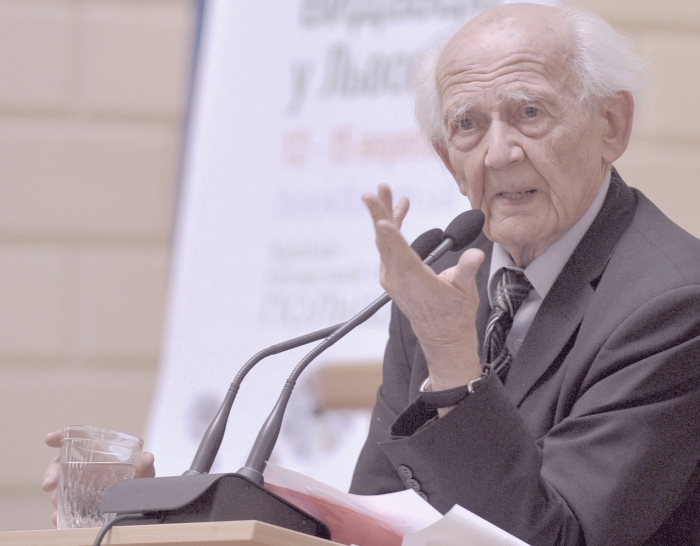
Polish philosopher Zygmunt Bauman passed away at the age of 91 surrounded by family at his home in Leeds Monday following illness. Bauman was born in 1925 in Poznan (Posen) and in 1939 fled Nazi-occupied Poland for Soviet-occupied Poland. In the Communist Polish military Bauman did political education, took part in the battles for Kolberg (Kołobrzeg) and Berlin and worked in Communist security and espionage institutions.
Bauman took up sociology at the Warsaw Social Sciences Academy after the war and then transferred to philosophy at Warsaw University. He published his first book in 1960. Born to a non-observant Jewish family, Bauman left Poland during the anti-Semitic wave of 1968 and moved to Israel, teaching at Tel Aviv University. He soon moved from there to Leeds where he taught at Leeds University. Since the move to Leeds he wrote in English.
Bauman authored about 50 books and more than 100 articles on the topics of globalization, modernity, post-modernism, consumerism, morality and the Holocaust. His views concerning the Holocaust were extremely nuanced and included at times denouncements of Western Holocaust commemoration as a culture of death and a new religion with its own list of martyrs, “the Names,” intended to act as a sort of surrogate Judaism for the non-observant and Gentiles, or as a completely new religion but offering nothing of value to the human soul. Bauman’s most famous book, Modernity and the Holocaust (1989), draws upon Hannah Arendt and Theodor Adorno’s books on totalitarianism and the Enlightenment. Bauman argues he Holocaust should not be considered exclusively an event in Jewish history nor a regression to pre-modern barbarism. Instead, the Holocaust is deeply connected to modernity and its attempts to impose order. Procedural rationality, the division of labor into smaller and ever more specialized tasks, ever more refined taxa for species and seeing obedience as morally good all played a role in making the Holocaust possible. He said for this reason modern societies have not fully grasped the lessons of the Holocaust. It is viewed, according to Bauman’s metaphor, like a picture hanging on a wall, static, without utterance or meaning.
The late Lithuanian philosopher Leonidas Donskis counted Zygmunt Bauman among his friends and greatly respected his work. In 2007 Vytautas Magnus University in Kaunas conferred an honorary doctoral degree upon Bauman.
Our condolences to his many friends and surviving family members.
Defending a Murderer

by Grant Arthur Gochin
On December 16, 2016, I posted this about the efforts to remove the honors for the man responsible for the murder of my family in Lithuania – Noreika:
https://ggochin.wordpress.com/2016/12/16/noreika-monument/
The Cultural Heritage Department has responded; their response is attached to this post.
The Lithuanian Cultural Heritage Department will not do anything to remove the honors. They offer no explanations for how they come up with their decisions or why our facts were incorrect.
They say the plaque was installed in 1997 and belongs to the city, not the library. How do they know this when the city does not? Again they offer no backup.
Ona Šimaitė: Quiet Warrior for Life
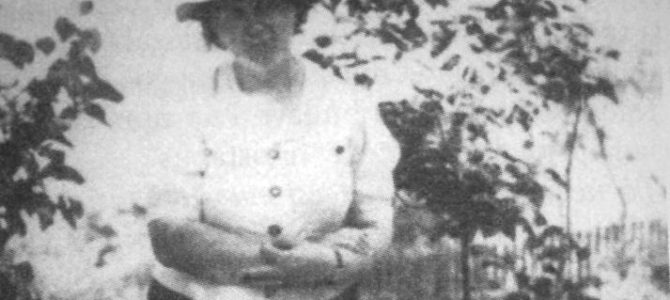
Ona Šimaitė in Israel. Courtesy Vilnius University Library
lzinios.lt
One hundred and twenty-three years have passed since the birth of Ona Šimaitė, who rescued dozens of Jews of Vilnius from death during World War II. Let’s recall the quiet heroism of this Righteous Gentile. Her name isn’t uttered often in Lithuania. Her commemoration consists of a plaque at Vilnius University and a small and narrow street named after her, winding from Kūdrų park at the edge of the Užupis district up, ending in steep steps leading to the Old Town. To the place which became the symbol of suffering and death to thousands of our fellow citizens 70 years ago who were fated to be born Jewish. To the Vilnius ghetto, where at the will of the Nazi occupier those condemned to die spent their final days. To the place whence the humble librarian Ona Šimaitė, without fear of death, rescued many who had lost hope.
Full story in Lithuanian here.
On the Position of Director General Siaurusevičius and Lithuanian National Radio and Television
lzb.lt
Lithuanian Jewish Community chairwoman Faina Kukliansky believes, as does the entire Lithuanian Jewish community, the position taken by Lithuanian Radio and Television director general Audrius Siaurusevičius and by the national broadcaster LRT in response to gestures depicting Hitler made by actress Asta Baukutė on the LRT television program “Atspėk dainą” is the right one and expresses the state’s position regarding its Jewish citizens. “I have to say Lithuanian National Radio and Television have demonstrated consistently and professionally their view on the centuries-long history of the Jews of Lithuania and have raised ‘uncomfortable’ Holocaust issues, something which even officials responsible for education haven’t done for many years. Also, LRT radio journalists are currently doing programs about painful historical events which to the present time influence life in the small towns after the destruction of the shtetls. I give them my gratitude for the work they’re doing and ask them to continue the radio series. No one should be afraid to say the word ‘Jew,’ but it’s important to understand and never forget what happened and how their Lithuanian fellow countrymen acted during the Holocaust, and why the Litvak community is so small today, and sensitive to all signs of anti-Semitism and Naziism,” chairwoman Kukliansky stated.
Behavior by Actress Unacceptable, Lithuanian State Radio and Television Director Says
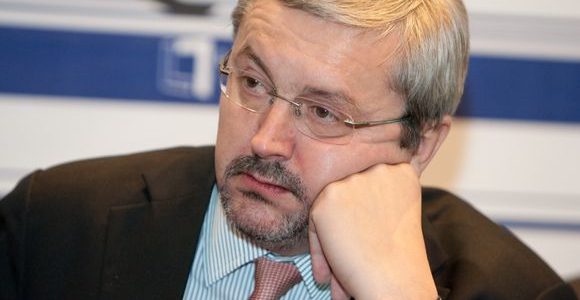
Vilnius, January 7, BNS–Lithuanian National Radio and Television director Audrius Siaurusevičius says the behavior of actress Asta Baukutė was intolerable in a program broadcast in Lithuania Friday where she made gestures mimicking Adolf Hitler, and so the television series has been canceled on the national network.
“We truly do not tolerate this thing and decisions were made yesterday, the show is canceled. Since people are behaving without any sense of responsibility, grave measures were applied. I consider this a personal insult to all my principles,” Siaurusevičius told BNS. He said the national broadcaster broke all contractual ties with television show producer Modestas Karnaševičius’s company Viena Planeta [One Planet] and is not planning to renew any business relations with the company in the future.
“I think we will have nothing to do with them. Our trust has been broken. We work on the basis of trust and cannot supervise everything. They don’t meet the requirements which we demand inside LRT,” the director of LRT said.
Rav Moshe Shapiro Has Died
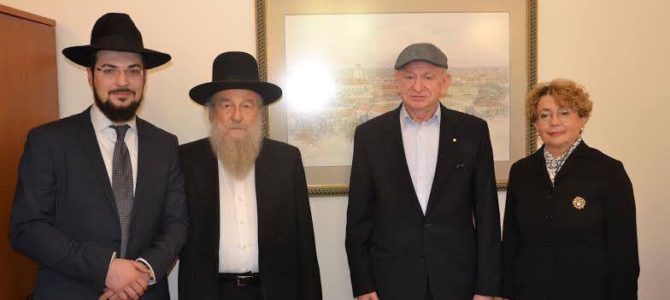
The Lithuanian Jewish Community reports with deep sadness the death of Rav Moshe Shapiro, the Petirah of Hagaon, the Litvak ultra-Orthodox community’s spiritual leader in Israel. The author of numerous seforim and the noted rosh yeshiva of Jerusalem’s Yeshiva Pischei Olam passed away January 6 at Hadassah Ein Kerem Hospital at the age of 82 following a lengthy illness.
His father Rav Meir Shapiro with his brother Rav Simkha Ziselom left Lithuania for Israel to study Torah at the Hebron yeshiva. Rav Moshe Shapiro studied both in Panevėžys and at the Hebron yeshiva. His mentors were the Rav Eliyahu Eliezer Dessler and Rav Yitzchok Hutner.
By the age of 18 Shapiro already new the entire Babylonian Talmud by heart. The Rav Avrohom Yeshaya Karelitz recommended he intensify his study of the Talmud.
Rav Moshe Shapiro is one of the first contemporary rabbis who performed Jewish outreach, returning Jews to the faith of their fathers and teaching Judaism.
Rav Shapiro visited Lithuania last year and spent some time in towns and cities connected with his family history. When he and Lithuanian Jewish Community chairwoman Faina Kukliansky met then, he told her the Lithuanian Jewish Community has a great future ahead.
The Lithuanian Jewish Community is deeply saddened by the death of Rav Moshe Shapiro and express our deepest condolences to his family, friends and students.
Baruch dayan ha’emet.
Why Don’t Lithuanian Politicians Condemn Colleague Baukutė’s Behavior?

As Hitler’s Mein Kampf again becomes a bestseller in Europe, Russian-American journalist Mikhail Klikushin writing in the New York Observer, owned by Donald Trump’s son-in-law Jared Kushner who is scheduled to leave publishing in order to devote all his time as president Trump’s senior advisor, wonders why Lithuanian politicians haven’t come forward to condemn former MP Asta Baukutė’s strange behavior on Lithuanian state television.
—
Lithuanian Official Gives Nazi Salute on Live TV Show
by Mikhail Klikushin
Ex-MP grins, yells “Jew! Jew! Jew!” while saluting the führer as tensions mount to Russia’s west
This year, Mein Kampf, Hitler’s autobiography, in which he laid the groundwork for a policy of extermination against the Jews, became a bestseller in Europe.
Having taken a look at what has been going on within recent additions to the European community—including former Soviet republics that broke loose from Russian dominance—one begins to see why the brutal dictator is experiencing a renewed wave of popularity.
Last Saturday, for example, it became known that the Lithuanian Radio and Television broadcasting corporation (LRT), funded by the Lithuanian government, temporarily took off the air the popular TV show Guess the Melody after a scandalous video surfaced causing public outrage, Delfi reported.
According to LRT assistant director Rimvydas Paleckis, on Friday night during a live broadcast of the show one of the participants—popular Lithuanian movie and theater actress Asta Baukutė—having recognized the melody, became so excited that she victoriously shouted “Yeah! Yeah!” and jumped up from her seat.
She was about to win the contest.
Standing to her full height in her leather coat and dancing out of excitement, she put both the index and middle finger of her left hand to her upper lip—to indicate Hitler’s mustache—and raised her right hand in a Nazi salute high into the air.
She could not contain herself.
“Žydas! Žydas! Žydas!” (Jew! Jew! Jew!) she yelled in Lithuanian—letting it be known to the cheering studio audience and the show host that the melody in question belonged to Lithuanian composer Simonas Donskovas.
Donskovas, as readers already might have figured out, is a Jew.
“I am in shock,” LRT assistant director Rimvydas Paleckis said the next day.