
History of the Jews in Lithuania

Holocaust Researchers Meeting in Vilnius

Vilniuje susitinka Holokausto tyrėjai

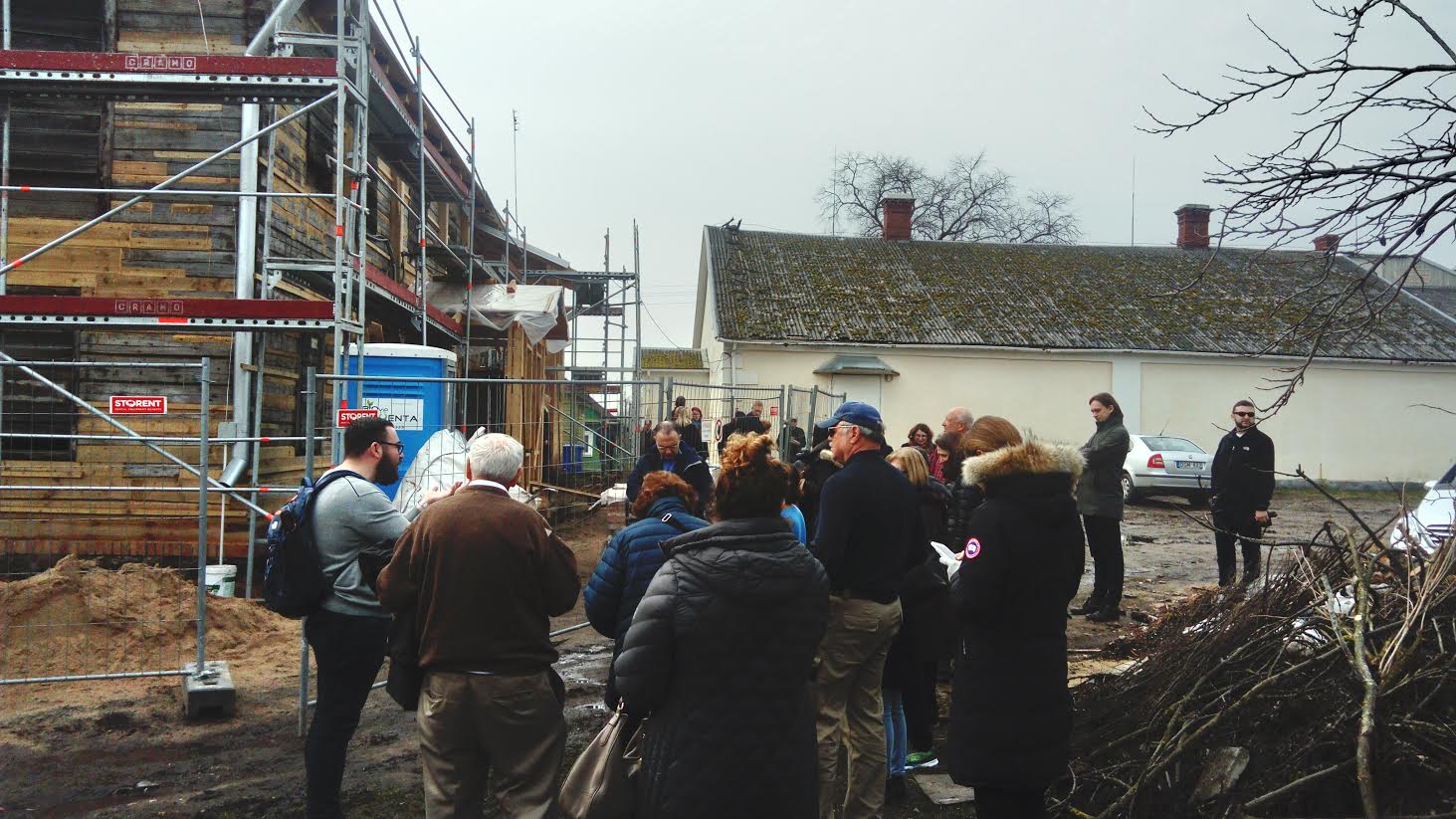
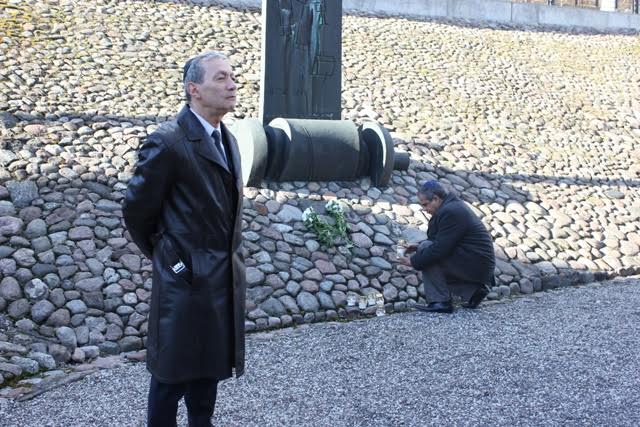
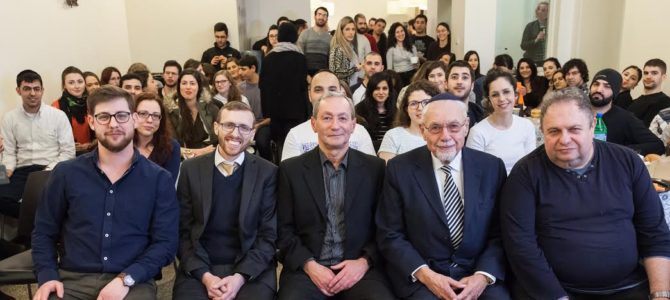
Vilnius, March 22, BNS–The two-day conference “The Beginning of Mass Murder: Identification and Remembrance of Mass Murder Sites from Summer and Fall of 1941” began at the Vilna Gaon State Jewish Museum in Vilnius Wednesday. Lithuanian Jewish Community chairwoman Faina Kukliansky was a speaker.

IHRA3

The International Holocaust Remembrance Alliance with 31 member-states and a number of historians, educators, museum specialists and other Holocaust researchers from around the world organized the conference. Lithuania acceded to IHRA membership in 2003 but this is the first time an international IHRA conference has been held in Vilnius, a museum representative said.

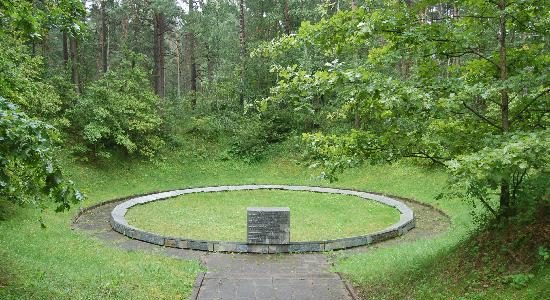
The two-day conference is being hosted by the Tolerance Center of the museum and is dedicated to identifying, marking and commemorating mass murder sites in the Baltic states, Romania, Ukraine and Belarus.

Dramatic Outcome in Lithuanian Chess League

The third round of the Lithuanian Chess League was held in Vilnius over the weekend during which two tournaments were played and the strongest Lithuanian clubs emerged.

After two rounds (five parties) it seemed there would be no surprises this time. The MRU team dominated the championship winning all five matches for 10 points. Gigant Chess of Panevėžys was a close second with 8 points while Makabi and Margiris from Kaunas (a Lithuanian Chess League champion many times over) each lagged behind by a point at 7. In the sixth round MRU lost 1.5:3.5 to Makabi and Gigant Chess and Margiris each gained a point (2.5:2.5).

Before that fateful round MRU was still out in front with 10 points, but Makabi and Gigant Chess were already hard on their heels, both teams holding 9 points. In the last round the chess players weren’t entirely focused on their own games and kept track of the competition as the situation dramatically changed and made mental calculations about the points needed to end with a higher standing.

Remembering the Children’s Aktion in Kaunas

The Kaunas Jewish Community invites you to come and remember the victims of the Children’s Aktion in the Kaunas ghetto during the Holocaust. Approximately 2,000 children were murdered during the mass murder operation. This will be the 73rd anniversary of that tragic day. The event will be held at 4:00 P.M. on March 24 at E. Ožeškienės street no. 13 in Kaunas.

American Hebrew Academy Director Visits LJC

Glenn700

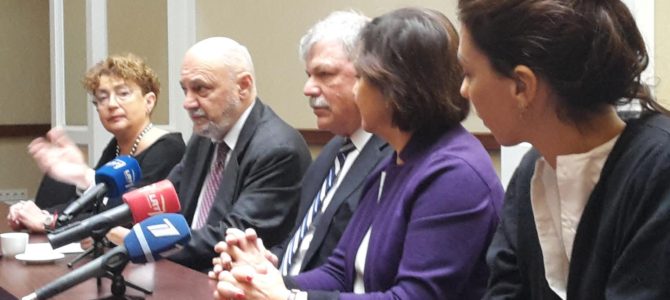
Lithuanian Jewish Community chairwoman Faina Kukliansky met with Glenn Drew, chief executive officer of the American Hebrew Academy, the international Jewish college preparatory boarding school with a distance-learning program via internet, on March 17 to discuss educational opportunities for members of the LJC and their children. The Baltic Council for International Education facilitated the meeting.

Mr. Drew first visited Vilnius in October, 2016. Reading recently about the Lithuanian Jewish Community’s chairwoman and her work, he decided to make contact with the Community directly.

In a letter to the chairwoman sent before the meeting, Mr. Drew wrote:

“I spend a considerable amount of time traveling around the world visiting Jewish communities to inform them about opportunities for Jewish teenagers to study and the American Hebrew Academy in the United States. During my visit to Vilnius, I welcome the opportunity to meet with you and your board. I believe we share many common interests and would like to explore how we may collaborate in the future.

Matzo Is Here!

LŽB logo paveiksliukas1Macai

Members of the Vilnius Jewish Community are invited to pick up a box of matzo bread in room 201 at the Lithuanian Jewish Community in Vilnius on workdays between 8:30 A.M. and 4:30 P.M. from March 22 to March 28. On Sunday, May 26, please come between 11:00 A.M and 5:00 P.M. Try to remember to bring you membership card!

Please note: Matzo will be distributed to social program clients separately. They are invited to pick up a box of matzo bread in the computer classroom on the first floor of the Lithuanian Jewish Community in Vilnius on workdays between 11:00 A.M. and 3:00 P.M. from March 21 to April 4.

Every member will receive a full box of matzo without charge, but due to financial constraints we are unable to provide more than one box per member. Additional boxes may be purchased at the Bagel Shop Café for €3.50 per 1 kg box.

Michael Oren, Deputy Minister for Diplomacy at Israeli PM’s Office, Visits LJC

Oren M.

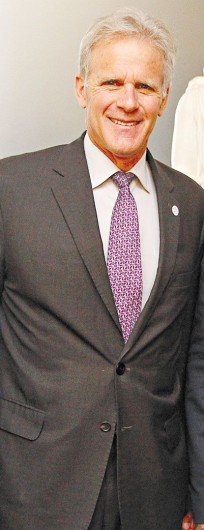
Michael Ben Oren, deputy minister for diplomacy at the Israeli Prime Minister’s Office and Israeli MK in the Kulanu party as well as former Israeli ambassador to the United States (2009-2013) visited the Lithuanian Jewish Community March 16, where he met and spoke with LJC chairwoman Faina Kukliansky. He asked about current events in the community and took in the architecture of the building. On March 17 the Institute of International Relations and Political Science of Vilnius University is hosting a lecture by Mr. Oren on Israel’s foreign policy, to be followed by a discussion with students, teachers and the public.

Michael Ben Oren is an American-born Israeli historian, writer and politician. He was visiting professor at Harvard in 2006 and visiting professor at Yale in 2007. He is the author of New York Times-bestseller Power, Faith and Fantasy, and also of Six Days of War: June 1967 and the Making of the Modern Middle East.

The public event at the Institute of International Relations and Political Science of Vilnius University located at Vokiečių street no. 10 is scheduled for 10:00 A.M. March 17 and is being co-sponsored by the Lithuanian Ministry of Foreign Affairs. For more information contact Viktorija Gailutė at the email address viktorija.gailiute@spmi.stud.vu.lt or call (5) 251 4148.

Special Celebrations at the Šiauliai Jewish Community

Last weekend was special for the Šiauliai Jewish Community. Friday many members of the community gathered to celebrate the Sabbath conducted properly by Rabbi Kalev Krelin. The men went for prayer to the synagogue and the women lit the candles to the kiddush and challa. We had a special guest: Israeli ambassador to Lithuania Amir Maimon paid an unofficial visit.

At the culmination of the evening the entire community enjoyed kosher floimen-tzimmes.

Early Saturday morning the men gathered again for prayer at synagogue with the rabbi.

In the evening all members of the community dressed up in carnival costumes and masks and gathered to celebrate Purim. Rabbi Kalev Krelin read from the Book of Esther and all of us, together and loudly, wiped the name of Haman from history.

This year the holiday coincided with the 27th anniversary of modern Lithuanian independence and the community didn’t neglect that holiday either, singing the Lithuanian national anthem (and Hatikvah).

With our feasting and fun we celebrated Purim according to all the Jewish traditions.

Department of Ethnic Minorities to Launch DVD on Polish, Jewish Minorities in Lithuania

The Department of Ethnic Minorities to the Government of the Republic of Lithuania invites the public to attend the launch of a multimedia DVD on Polish and Jewish heritage in Lithuania.

The event is scheduled for 2:00 P.M. March 16, 2017, at the Department of Ethnic Minorities building at Raugyklos no. 25 in Vilnius.

For more information and the register, please email informacija@tmde.lt

Purim at the Panevėžys Jewish Community

Purim is the spring holiday when we celebrate the rescue of the Jews from death in Babylon. On March 12 the Panevėžys Jewish Community began the celebration with chairman Gennady Kofman reading the Purim story out loud, the Book of Esther from the Bible which tells of the destruction facing the Jews living in Babylon and the miracle of their rescue due to the efforts of queen Esther, the Jewish wife of the Persian king. Not only were the Jews saved, they defeated the king’s evil vizier Haman who chose the day for the destruction of the Jews by casting lots, but who was himself punished. Many children attended the Panevėžys Jewish Community’s Purim celebration. There was a dining table for children, the children put on plays and watched films and concerts in connection with Jewish history. Purim is the happiest Jewish holiday and there was much song and much laughter. Everyone received a small gift as well.

Lithuanian Jewish Community Chairwoman Faina Kukliansky’s Greetings on March 11, Day of Restoration of Lithuanian Independence.

I wish all members of the community a happy holiday!

For Litvaks Lithuania is the land of our ancestors, and March 11, the day 27 years ago when Lithuanian independence was restored, is an important holiday for us, marking as well the beginning of the rebirth of the surviving Jewish community. March 11 is for each of us an exceptional and dear day, and we cannot allow ourselves to forget how important the state where we live and where our children grow is to us. In 1918 as the first Republic of Lithuania was being born her Jewish citizens volunteered to fight for Lithuanian freedom, and went on to foster the economic and social welfare of this state.

In the run-up to March 11, significant activity by the Lithuanian Jewish initiative group took place in 1988 dedicated to the rebirth of Jewish culture. After the Lithuanian independence movement Sąjūdis was established, Lithuanian Jews were faced with the dilemma of how Jewish relations with the Lithuanian national movement would develop as the wounds of the Holocaust remained painful, recalling the tragedy which took place in this country.

Along side the rebirth of Lithuanian independence, first came the rebirth of Jewish cultural activity, and the Jewish Cultural Association was the first to hold a congress, beginning the conversation about the destruction of the Jewish community during the Holocaust in 1989, for the first time since the decline of the Soviet era in Lithuania. I have to say Jewish-Lithuanian relations in the historical context, their evaluation and research began exactly with the rebirth of independence when there had to be an assessment of the Holocaust and the active role played by Lithuanians in it had to be admitted. There were also efforts made to help Jews restore their Jewish identity.

The Jewish communities in the shtetls were exterminated in the Holocaust, the shtetls are gone and Yiddish is no longer spoken in Lithuania. Currently the Jewish communities in Vilnius, Kaunas, Klaipėda, Šiauliai, Panevėžys and Švenčionys have been re-formed. We still dream of a revival of the Yiddish language.

In the recent past we have sensed the emergence of a new generation in Lithuanian society who are interested in Jewish history and the life of the Jews in Lithuania, and slowly but surely stereotypical thinking is fading away.

When we speak of the values of March 11, we underline human rights and freedoms and their necessary consolidation and growth. We hope for the generation who understand their importance and who cherish and protect these rights and freedoms, and who connect love for their native land with self-respect and respect for all of its citizens.

Bagel Shop Café Wishes You a Happy Purim and Offers Traditional Holiday Foods

Hag Purim sameakh!

The Bagel Shop this week offers vegetarian bebelakh. During the Purim holiday period we are also making a variety of delicious treats including hamentashen and serving wine. We are making vegetarian dishes in honor of Queen Esther, who was a vegetarian. The Bagel Shop is located at Pylimo street no. 4 at street level in Vilnius.

Bean bebelakh, a recipe from Riva Portnaja’s mother Sara Berienė

Sara always made this dish for the Purim holiday where all dishes were vegetarian in honor of Queen Esther.

Soak a liter of large beans overnight, boil in salted water for a long time until they go soft. Served cold sprinkled with salt. Simple and delicious!

Free Hamentashen for Kids!

hamentash

Children who come into the Bagel Shop Café in Purim masks or who say the secret code phrase–Hag Purim sameakh!–will receive a small gift.

This week Jews in Vilnius and around the world are baking the pastry called hamentashen, aka Haman’s ears, engage in an exchange of gift bags or Purim baskets of food and drink called mishloakh manot and put on the best parties of the year. Purim is the one holiday where adult Jews are allowed to get drunk and it considered customary to do so.

Our Litvak hamentashen are made with yeast according to recipes from families of Lithuanian Jewish Community members. Head baker Riva Portnaja tells how in her family they called hamantashen “ormentashen,” and her mother always added yeast to the dough. Classical Litvak hamantashen only used poppy seeds for filling and the triangles forming the base and top of the pastry are almost sealed close.

For more, see this facebook page.

Separate Program for Jewish Heritage Proposed


Diana Varnaitė. Photo courtesy Lithuanian Parliament

BNS–Director of Lithuania’s Cultural Heritage Department Diana Varnaitė is proposing separate financing for preservation of Jewish heritage. Lithuanian parliamentary speaker Viktoras Pranckietis approves the idea.

“We would think it would be appropriate to increase financing, and I told the speaker of parliament about our hope that it would be worthwhile for all of us together, with the leadership of the Ministry of Culture, to discuss … a separate line for Jewish heritage, not just for synagogues, because we have some [other] unique monuments, for example, the former religious school, the yeshiva building in Telšiai. These are sites in which we should take pride, as our own heritage, and which would make our [rural] regions more attractive and draws for tourists,” Varnaitė told BNS Wednesday after a meeting with the parliamentary chairman.

Parliamentary speaker press representative Dalia Vencevičienė said speaker Pranckietis expressed approval for the idea. “We have a policy direction on heritage and its preservation. The chairman would welcome the idea if the Ministry of Culture adopted a decision on a separate line in the budget,” she told BNS.

LJC Youth Clubs Celebrate Purim

Dear Community members,

The Lithuanian Jewish Community and the Vilnius Religious Jewish Community greet you on the upcoming holiday of Purim and invite you holiday celebrations on March 12.

The LJC youth clubs Ilan, Dubi and Dubi Mishpaha will hold a Purim celebration at 1:00 P.M. on March 12 on the third floor of the Lithuanian Jewish Community. Entrance is free but only those in costume and/or masks will be allowed in!

For more information contact Jelizaveta Šapiro at +370 65527411 or Pavel Guliakov at +370 68542463.

Were We Not Strangers in the Land of Lithuania?

by Geoff Vasil

Shrovetide is the Catholic period of confession and repentance marking the transition from winter to spring in the calendar year. In Lithuanian it’s called Užgavėnės, which is how the Lithuanian language used to indicate the period before Gavėnia, or Lent, the period leading up to Easter. Both the English and Lithuanian names are rather obscure—the English name almost sounds like “shroud” and to shrive is an archaic verb for confession and absolution by the Catholic priest—but the holiday is immediately recognizable to people around the world in its more popular names Carnival, Mardi Gras and Fat Tuesday.

Tuesday is really the last day of the Shrovetide period and represents European pagan/Catholic syncretism, the mixture of pagan bachanalia and saturnalia-type celebrations with the Christianity emanating out of Rome. The excesses and parties of Carnival have always been condemned by ecclesiastical authorities and yet have continued to the present. Carnival in many ways mirrors Halloween, which precedes All Saints’ Day, and in Lithuania there is a tradition of Shrovetide “trick-or-treaters,” children in costume going door to door seeking pancakes.

These costumed characters are a reflection of earlier and larger Shrovetide processions in Lithuania. In the post-1990 period of Lithuanian independence great efforts have been made to revive what was for all intents and purposes a dead tradition, public Shrove Tuesday events. The Soviet regime consciously sought to extinguish the tradition as a religious manifestation, but doing away with the traditional holiday was accomplished in different ways in different locations. The most effective manner of getting rid of the holiday was co-opting it in a more general Soviet “Ushering-out of Winter” holiday using a cast of costumed characters slightly more acceptable in Soviet society, but even the best-laid plans of the Soviet methodologists never really did away with the mischief inherent in the celebration and against which the Catholic Church had fought unsuccessfully for centuries.

Jewish Character in Lithuanian Shrovetide Processions an Example of Stereotypes

MG_0191ktoM2
photo: Vytautas Daraškevičius

15min.lt

by Paulius Gritėnas

Israel’s ambassador to Lithuania Amir Maimon Wednesday issued a brief press release saying the long history of the Jews of Lithuania, destroyed monuments, names and works are only now being restored.

“We are moving ahead slowly to lead Jewish history out of the dark. And there’s a long road ahead of us… So far Jews in Lithuania are remembered mostly in a different way, as grotesque Shrovetide masks,” the statement read [in paraphrased translation from Lithuanian], going on to pose the rhetorical question of whether it isn’t time to adapt traditions in such a way they don’t offend the ethnic minorities of Lithuania.

Shrovetide is one of the oldest holidays in Lithuania and once upon a time was called Ragutis. It’s not surprising it contains an abundance of stereotypical thinking and visual codes demonstrating the simplified way we perceive our environment and people who are different in that environment.

Full story in Lithuanian here.

Statement by Lithuanian Jewish Community Chairwoman Faina Kukliansky on Shrovetide

Parliamentary Culture Committee chairman Ramūnas Karbauskis on his social media page invites everyone to celebrate Užgavėnės [Lithuanian Shrovetide, or Carnival] in Naisiai, Lithuania. Event organizers used illustrations reminiscent of anti-Semitic propaganda used by the Nazis. This was reported on the internet site of the newspaper Lietuvos žinios on February 24, 2017.

“At the invitation of the most influential member of parliament R Karbauskis [Karbauskis is the chairman of the ruling Peasants and Greens Union party], the public is called upon to celebrate Shrovetide at the Naisiai location, associated with the politician, where, it seems, anti-Semitic ideas not only thrive, but are a part of everyday communication. Under the header of “Big Shrovetide in Naisiai” on social media, the invitation and publicity for the event provides more than just an events program, it also includes [anti-Semitic] sayings…”

It didn’t take long for the Lithuanian public to react. A wave of outrage appeared, as did anti-Semitic comments on the internet. One of the leaders of the governing coalition of the nation, after all, presented an invitation to celebrate Shrovetide using fascist propaganda from 1939. “Lithuanians know the Holocaust began soon after that,” LJC chairwoman Faina Kukliansky commented.

“Following the February 16 march in Kaunas where it was hard to tell the ultra-nationalists from the patriots, this is continuing now into Shrovetide,” chairwoman Kukliansky said. “Is this the policy of the new ruling party? How are we to understand this? An innocent holiday celebration is transformed in the Naisiai announcement into clearly anti-Semitic jingoism, a return to the pre-World War II era. How should Lithuanian Jews feel? The Shrovetide celebration is a holiday, we understand ethnology, but this is beyond Shrovetide and even its masks, these are anti-Semitic Nazi masks which arrived in Lithuania from Hitler’s Germany. We would like to hear from Mr. Karbauskis’s lips whether he is or is not an anti-Semite. I am the chairwoman of the Lithuanian Jewish Community and I am requesting an answer to the question about what his views are regarding Jews, if he has the courage to display such masks in public. Existing Lithuanian laws criminalize the spreading of fascist propaganda,” Kukliansky said.