
History of the Jews in Lithuania

Vilnius Synagogue Map Launched

“When we speak of Jewish cultural heritage, we don’t mean a foreign people who lived apart from everything and one day decided to move. We’re talking about what was in Lithuania, about the Lithuanian nation’s heritage, not just of the Jews,” Israeli ambassador to Lithuania Amir Maimon said Friday at the launch of map of the synagogues of Vilnius held at the ambassadorial residence. One of the goals of the map project was to show just how interconnected Jewish and Lithuanian history is.

Of 135 Synagogues, Only One Remains

The map contains a total of 135 sites of synagogues which operated before the Holocaust. Most of the synagogues were located in the Vilnius Old Town, around the Jewish area of the city centering on the Great Synagogue and spreading along Vokiečių, Gaono and Stiklių streets. There were more than 30 synagogues located in that compact area, but none of them remain. The synagogues were razed and other buildings built in their place, or the sites were used as public spaces.

Full story in Lithuanian here.

Condolences

Donald Jay Rickles passed away at his home in Beverly Hills, California, April 6 from kidney failure at the age of 90. He is survived by his wife Barbara Rickles (formerly Sklar), his daughter Mindy Rickles and two grandchildren Ethan and Harrison Mann. His wife was at his side as he died. Their son Larry, born in 1970, passed away in 2011.

He was born to Jewish parents in Queens, New York, on May 8, 1926. His father Max Rickles emigrated in 1903 with his Litvak parents from Kaunas (then Kovno in the Russian Empire) and his mother Etta Feldman was born in New York City to Austrian immigrant parents. Rickles grew up in Jackson Heights, New York.

Vilna Gaon Museum on New Jewish Museum Proposal

The Vilna Gaon State Jewish Museum has issued a statement via press release about a recent proposal by Lithuanian officials to set up a Holocaust-free new Jewish museum in the Palace of Sports or next to it on land which contains the centuries-old historic Jewish graveyard of Vilnius.

Let’s Create a Strategic Strategy for Jewish Heritage, Not Disneyland

The Vilna Gaon State Jewish Museum was disappointed by information appearing in the press last week about plans by government institutions to establish another Jewish museum in the Lithuanian capital instead of assuring support for existing projects.

The Vilna Gaon State Jewish Museum, whose sections are housed in authentic buildings closely connected with the Jewish history of Vilnius, has recently been undergoing an intense and productive period. We host international events at the highest level, for example, the International Holocaust Remembrance Alliance conference held on March 22 and 23, and the number of visitors is constantly growing. New permanent exhibitions are being created for installation in our historic buildings, including the opening this fall of a new Samuel Bak Museum, showcasing the Litvak painter’s life and works, and in the near future we also intend to open the Museum of Lithuanian Jewish Culture, aka the Litvak Center and a dedicated Lithuanian Holocaust and Vilnius ghetto memorial museum, which has attracted the attention of international museum organizations including ICOM.

The latter museum is to be housed in the historical building on Žemaitijos street (former Strashun street) which was listed as a cultural treasure last month. This is the building which housed the Mefitsei Haskalah library before World War II and the Vilnius ghetto library during the war. which organized cultural events inside the ghetto and served as a secret meeting place for members of the ghetto resistance organization. In 1945 Holocaust survivors established the short-lived Jewish Museum in the building, quickly shut down by the Soviet government. The Vilna Gaon State Jewish Museum intends to reutilize the building for Holocaust education. After the museum has these additional sections, a unique route will be created for the visitor to explore Jewish Vilna.

Vilnius Mayor, Lithuanian PM Decree: And There Shall Be Built a Jewish History Museum Next to the Palace of Sports

Vilnius, March 30, BNS–Lithuanian prime minister Saulius Skvernelis said there are deliberations on changing the project for the reconstruction of the Palace of Sports to include a equip a building to host a Jewish history museum and for conferences. There was consideration on holding concerts and other cultural events in the project initiated by the former Government.

Vilnius mayor Remigijus Šimašius proposed setting up a Litvak History Museum next to the Palace of Sports which the Government is planning to renovate. “I think the Government has done the right thing in halting the untransparent bid begun earlier. But there should be a conference center there without any doubt. We just discussed that it would be more sensible if next to the conference center or partially integrated with the conference center there were a museum of Litvak history. It is probably this could be accomplished wonderfully and would become an attraction. We agreed to develop the idea further. I’m glad my opinion and the prime minister’s coincide on this,” the mayor of Vilnius told BNS after meeting with Lithuanian prime minister Saulius Skvernelis Thursday.

“It should be able to be used for conferences. Now there is a concept, a conference and concert hall, so it should be conferences and a museum,” the prime minister told reporters at parliament.

Recovering Memory: Vilnius University Memory Diploma Graduation Ceremony

Event at 3:00 P.M. on April 3, 2017

Vilnius University will host a Memory Diploma Graduation Ceremony in the small auditorium at Universiteto street no. 3, Vilnius. The ceremony is intended to honor students, staff and members of the university community who were marginalized, thrown out, not allowed to finish their education or academic work and otherwise repressed because of the actions of the totalitarian regimes or local collaborators.

The university was compelled to rethink its relation with the past after receiving a letter from Israeli professor of medicine Moshe Lapidoth in the summer of 2016, requesting a symbolic commemoration of his uncle Khlaune Meishtovski who was a student at the Mathematics and Natural Sciences Faculty of Vilnius University before the war. After eight successful semesters studying chemistry and physics, he was expelled July 1, 1941 because he was a Jew.

In 2016 the university formed a commission to do a historical study and decide selection criteria for people who were unfairly deprived of an education there. A symbolic Memory Diploma was established to remember these people. It is hoped the graduation ceremony will become a university tradition.

After preliminary study, the university determined about 650 Jews and 80 Poles were forced out as well as a professor whose wife was Jewish during the beginning of the Nazi occupation. Several hundred Lithuanians were also deprived of university study and employment.

There will be a live-stream on facebook:

https://www.facebook.com/events/898366480305748/

LJC Chairwoman Faina Kukliansky Speaks at National Equality and Diversity Awards Ceremony

The Lithuanian Jewish Community and other ethnic communities and public organizations appreciate the National Equality and Diversity Awards includes a nomination for “Dialogue between Peoples.”

As a member of an ethnic minority, I feel a more enlightened view in society on topics such as the Holocaust and xenophobia. People are slowly coming around to asking questions, engaging in discussions and thinking about the issues. Four years ago the Lithuanian Jewish Community began the Bagel Shop tolerance campaign which opened the Community’s doors to the public and made Jewish culture and history more accessible and, of course, more attractive. When the Community opened its doors, the public opened their hearts to the Community. I would like to thank everyone who took an interest and participated in this tolerance initiative which I believe marked the beginning of a small “dialogue between peoples” revolution. I present the highly esteemed candidates for the “Dialogue between Peoples” award:

Marius Ivaškevičius, the force behind the March of Memory dedicated to the murdered Jewish community of Molėtai. A record number of people turned out to remember and honor those killed, up to 3,000 participants marched along the last route taken by the victims of genocide perpetrated by Lithuanian hands.

Lithuania’s Shoah Whitewash Project

Efraim Zuroff of the Simon Wiesenthal Centre in Jerusalem has said the Lithuanian authorities were “very culpable.”


A derelict shul in Vilnius (Getty Images)

Lithuanian parliamentary ombudsman Augustinas Normantas has refused to open an investigation into a complaint that his country’s Genocide and Resistance Center presents a revisionist version of wartime history.

Instead, the ombudsman said that the center itself must address the issue first, and “if its answer is disputed, then in a court of law.”

The complainant, Grant Gochin, has challenged the Genocide Center’s description of Lithuania’s wartime treatment of its Jews, calling it “a distortion of history and an insult to the Jewish citizens of Lithuania.”

New American Jewish Committee Office in Warsaw to Work on Jewish Issues in Baltic States, Too

Warsaw, March 28, AP/BNS–In Warsaw Monday an official ceremony opened the new American Jewish Committee (AJC) office there. The AJC has been operating for 111 years with headquarters in New York but has long been operating in Central and Eastern Europe as well.

It was the first Jewish organization which called for the unification of East and West Germany when the Berlin Wall fell. It also supported the aspirations of Central and Eastern European states to join NATO and the EU. Poland’s president Andrzej Duda welcomed the AJC to Poland and said Poles “until today with gratitude remember your support for our goals.”

“I am certain this will give further impulse to trans-Atlantic cooperation,” the president of Poland said in a press release which was read out at the ceremony Monday evening by a presidential advisor. The organization says it is pledged to support democracies because it believes open and tolerant societies provide greater safety for Jews and other minorities.

The new AJC bureau in Warsaw will concern itself with Jewish issues in Poland, the Czech Republic, Hungary, Slovakia, Estonia, Latvia and Lithuania.

Its priority is supporting good relations with Israel and the United States and says these relationships are an essential matter in insuring geopolitical security for Jews.

Anti-Semitism in Soviet Lithuania: The Case of the Vilnius Money-Changers

Antisemitizmas Sovietų Lietuvoje. Vilniaus „Valiutininkų byla“

Bernardinai.lt

by Justas Stončius, doctoral candidate and lecturer at the Institute of the History and Archaeology of the Baltic Region, Klaipėda University

Fifty-five years ago on March 22, 1962, death sentences were issued to three Jews from the Lithuanian Soviet Socialist Republic. They were accused of violations in exchanging currency. The local press reported the trial in detail and the Western press covered it as well, viewing it (correctly) as traditional anti-Semitism, whose existence in the USSR was denied. Klaipėda University doctoral candidate Justas Stončius discusses the motivations and history of the Vinius Money-Changers Case.

The trial of the “Vilnius money-changers” lasted from January 30 to March 22, 1962. The Supreme Court of the Lithuanian Soviet Socialist Republic tried eight people of Jewish ethnicity who were accused of violating the rules for exchanging currencies and of currency speculation. The decision was made to hold a public trial and a special group of correspondents was formed to cover the trial in newspapers and magazines. Invitations were distributed at Vilnius city factories to the more active workers and activists in the production sector. During sentencing the death sentence was given Aron Reznitsk, Mikhail Rabinovich and Fyodor Kaminer, while Basia Reznitsk was sentenced to 15 years’ imprisonment, decreased to 10 years 6 years later.

The Vilnius Money-Changers Case received much attention in the West. On April 17, 1962, French newspaper Le Progrès reported “by order of the Vilnius Tribunal three Lithuanian Jews have been put to death” and noted the events had caused unrest in the Jewish community of the Soviet Union. France’s Le Monde newspaper stated Jews of the USSR were afraid “that they, too, might become scapegoats for the rampant lack of food stuffs in the Soviet Union…”

Full story in Lithuanian here.

Ponar Mass Murder Site Three Times Larger than Memorial Complex

Paneriuose nacių įkurta žudymo bazė buvo tris kartus didesnė nei dabartinis memorialas
Then-president of Israel Shimon Peres at Ponar in 2013. Photo: AFP/Scanpix

Vilnius, March 27, BNS–The mass murder site established by Nazi Germany in Ponar outside Vilnius during World War II was three times larger than the memorial complex there now, Lithuanian historians have discovered.

“The memorial is only a small part of the Ponar murder operation site. It might have covered 65 hectares, but the memorial complex/museum there occupies 19 hectares,” Lithuanian History Institute researcher Saulius Sarcevičius told BNS Monday. He said researchers working at the site since last year have discovered five new mass murder pits and additional research is being carried out on two of them.

German Historian Raises Painful Question of Lithuanian Collaboration


Dr. Christoph Dieckmann. Photo by Karolina Pansevič, © 2017 Delfi.lt

Effective cooperation between Germans and Lithuanians became a fatal trap for Lithuanian Jews. It was patriots–ethnic nationalists–who murdered the Jews in Lithuania, hoping to form a strong nation-state without Jews, Russians and Poles.

So German historian Christoph Dieckmann said in an exclusive interview with Delfi.lt. Dieckmann, who works at the Fritz Bauer Institute in Frankfurt, is the author of the two-volume Deutsche Besatzungspolitik in Litauen 1941-44 published in 2011. As a member of the Lithuanian International Commission to Assess the Crimes of the Nazi and Soviet Occupational Regimes, Dieckmann raises a painful moral question: why didn’t the Lithuanian people, seeing and hearing the Jews being murdered around them, protest? He believes it’s largely due to the position of the Church, which he believes was only concerned with what to do with the property of Jewish converts to Catholicism.

Full story in Lithuanian here.

Panevėžys Jewish Community Passover Celebrations

The Panevėžys Jewish Community greet you on the upcoming holiday of Passover and invite you to a series of events for the holiday:

April 6 Concert “From a Forgotten Book” at the Gabrielė Petkevičaitė-Bitė Panevėžys Regional Public Library, Respublikos street no. 14 at 5:00 P.M.

April 10 First Passover Seder at the Rojaus paukštė café, Respublikos street no. 4A at 6:30 P.M.

April 11 Second Passover Seder at the Panevėžys Jewish Community, Ramygalos street no. 18 at 2:00 P.M.

April 14 Third Passover Seder and Sabbath at the Panevėžys Jewish Community, Ramygalos street no. 18 at 2:00 P.M.

Israeli Exchange Students Feel at Home in Kaunas, Lithuania

For a decade now there has been a club for Israeli young people studying in Kaunas. The club meets at what is called the Kaunas Jewish Center in the center of town. Currently about 130 students from the Lithuanian Health Sciences University attend regularly and all Jewish students in Lithuania are welcome.

The center features a synagogue, the student club and a kosher food restaurant for students, and hosts events and holiday celebrations. A mikvah for married women is to be set up before Shavuot this year. Rabbi Moshe Sheynfeld and his right-hand man Aleks Minin run the center. Minin helps with the daily tasks and making new ideas real. The founder, financial supporter and tutelary spirit of the center is William Shtern, who says he’s happy the students have found a small piece of Israel in Kaunas, their second home, where they can further their own identities, but he says he is even more glad they are meeting one another, becoming friends and even starting families.

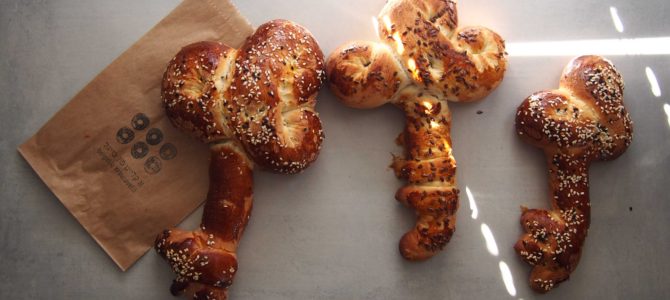
The Kaunas Jewish Community has been working with Shtern and his center for several years now and acts as partner in certain center projects, and people from the center attend Kaunas Jewish Community events. Every Friday people from the center donate fresh challa bread for the Kaunas Jewish Community’s Sabbath dinner.

You can find out more about the Kaunas Jewish Center here.

Ponar a Precisely Built Efficient Murder Factory

Three years ago archaeological digs began and are on-going at the Ponar Memorial Complex, and in 2015 two more killing pits were discovered, previously unknown, and a more-accurate perimeter of the mass murder site was determined. Saulius Sarcevičius, director of the Urban Research Department at the Lithuanian History Institute, says these discoveries are not only new, they’re unique. “Ponar, established as a so-called base, was not just any mass murder site, but was a precisely planned–down to the finest details–and built and continuously improved murder factory. The incomprehensible action of this mechanism has literally gone to ground and the traces discovered in the reconstruction relief map makes us living witnesses to these crimes which the Nazis tried so hard to hide,” the Lithuanian History Institute historian told the audience at the first International Holocaust Remembrance Alliance conference held in Vilnius.

The Lithuanian Special Unit, or Ypatingasis būrys, subordinate to the Nazi security service, murdered around 100,000 residents of Vilnius and Eastern Lithuania based on racial considerations from 1941 to 1944, most of them Jews. The Ponar site on the edge of Vilnius is the largest Holocaust mass murder site in Lithuania and is well known internationally.

Full story in Lithuanian here.

Klaipėda Jewish Community Celebrates Purim with Concert in Yiddish

The Klaipėda Jewish Community held a concert March 22 by the Klezmasters led by Lev Sandiuk and vocalist Alina Ivakh with solo performances by Mikhail Blinkov on clarinet and Aleksei Rozov on violin. The group performed songs in Yiddish as well as Hebrew, Lithuanian, Ukrainian, Russian, Belarusian and even Azeri. The concert was held as a sort of joint celebration of Purim, the happiest of Jewish holidays, and the International Day of Happiness. The Purim holiday was presented to the multicultural audience. The concert went late into the night and Klaipėda municipal officials and members of the various ethnic communities in Klaipėda thanked the organizers for the good time had by all.

For more, see here.

New LJC Project to Make Recommendations on Anti-Semitism at EU Level

Remembrance. Responsibility. The Future. These are the sequential steps leading to real changes in society. The future of democracy and tolerance depends on memory and responsibility assumed, allowing for moving forward. A step towards the future–after surveying, judging and adopting expertise from the best initiatives aimed at fighting discrimination–this is the goal of this new start-up project.

The new project is called Development and Publication of Recommendations for Actions to Fight Anti-Semitism and Romophobia in Lithuania.

The project is supported by the Erinnerung, Verantwortung und Zukunft foundation or EVZ in Germany. This foundation supports systematic and long-term studies of discrimination against and marginalization of Jews and Roma in Europe.

The Lithuanian Jewish Community has brought together a group of leading experts from among Lithuanian human rights organizations, community activists, academics and specialists from abroad. This group is undertaking to come up with effective and valuable recommendations on actions for fighting anti-Semitism and Romophobia in Lithuania.

Former Vilnius Ghetto Library Receives Protected Status

bns_logo_v2

Vilnius, March 22, BNS–The building of a former Jewish library in Vilnius has been entered on the registry of cultural treasures and there are plans to house a Vilnius ghetto museum there.

The Cultural Heritage Department announced the building with a commemorative plaque at Žemaitijos street no. 4 is being provided legal protection for its valuable archaeological, architectural and historical characteristics. The first council for assessing real estate cultural heritage at the department made the decision.

Cultural Heritage Department director Diana Varnaitė the surviving building which was part of the Vilnius ghetto and where the Mefitsei Haskalah library operated and later the Vilnius ghetto library is not currently being used and belongs to the Vilna Gaon State Jewish Museum.

“At [the museum’s] initiative there are plants to set up a museum commemorating the Holocaust in Lithuania and the Vilnius ghetto which will exhibit the vast Jewish cultural heritage and the history of the Holocaust in Lithuania. The names of Holocaust victims are read out there annually to mark the day of Jewish genocide,” director Diana Varnaitė said.

Žemaitijos 4 250px-Vilna1

Insults to Jews under the Sponsorship of Ramūnas Karbauskis

Lzinios.lt

The newspaper Ūkininko patarėjas [Farmer’s Helper], 30% of whose stock is owned by Union of Peasants and Greens [ruling] party leader Ramūnas Karbauskis, is printing articles raising doubt and uncertainty concerning the conferring of a state award to former ghetto inmate and Soviet partisan Fania Brancovskaja, articles which are insulting to the Lithuanian Jewish community. Historian and MP Arvydas Anušauskas says he thinks these sorts of publications bring to mind Nazi propaganda and contribute to the sowing of ethnic discord.

“The Lithuanian Jewish Community strives to base its words on facts, documents checked a hundred times before making a statement. These sort of accusations and this kind of rhetoric being published by Ūkininko patarėjas is, in my understanding, at the very least unethical,” Lithuanian Jewish Community chairwoman Faina Kukliansky told [the newspaper] Lietuvos žinios.

She was talking about publications in Ūkininko patarėjas which raise doubts concerning the actions during World War II of Fania Brancovskaja. Brancovskaja was conferred the Order of the Cross of the Knight “For Merit to Lithuania” on February 16 this year. Some publications have claimed Brancovskaja, who fled the Vilnius ghetto and joined the Soviet partisans, is complicit in the mass murder of residents of the village of Kaniūkai [Lithuania] carried out in January of 1944, although research by experts from the Center for the Study of the Genocide and Resistance of Residents of Lithuania found she had not taken part in that operation.

Going on Speculation

The March 14 issue of Ūkininko patarėjas contained an article stating: “On February 21 Ūkininko patarėjas was the first media organ in Lithuania to report to the public the President’s Office on the occasion of February 16 [Lithuanian Independence Day], by awarding the ‘knightess’s’ cross to a Soviet agent of diversion, to member of the Jewish gang which exterminated the village of Kaniūkai in Eastern Lithuania Fania Brancovskaja, in truth awarded and rehabilitated all the perpetrators of the genocide of the Lithuanian nation.”

Full story in Lithuanian here.

Department of Ethnic Minorities Presents Virtual Tour of Heritage Sites

The Department of Ethnic Minorities under the Government of the Republic of Lithuania invited those interested in cultural heritage to the launch of their multimedia DVD March 16. The DVD presents moveable and non-moveable heritage objects and sites of ethnic minorities living in Lithuania. The disc contains panoramic photographs of Lithuanian ethnic minority heritage sites by photographer Kostas Šukevičius. This section of the disc includes heritage associated with the Polish and Jewish communities in Lithuania.

Speakers and participants at the event included Cultural Heritage Department director Diana Varnaitė, senior archivist of Lithuania Ramojus Kraujelis, acting director of the State Tourism Department Indrė Trakimaitė-Šeškuvienė, journalist and author Aurelija Arlauskienė who has written a number of books about Lithuanian cultural sites including about the Paulava Republic, and Lithuanian Jewish Community heritage specialist Martynas Užpelkis. Donatas Puslys, editor-in-chief of the website bernardinai.lt, was moderator.

Full story in Lithuanian here.