 Program:
Klezmer music
Story of Hanukkah by Rabbi Kalev Krelin
Candle-lighting ceremony
Holiday statements and wishes
Traditional Hanukkah treats

Program:
Klezmer music
Story of Hanukkah by Rabbi Kalev Krelin
Candle-lighting ceremony
Holiday statements and wishes
Traditional Hanukkah treats
by Geoff Vasil
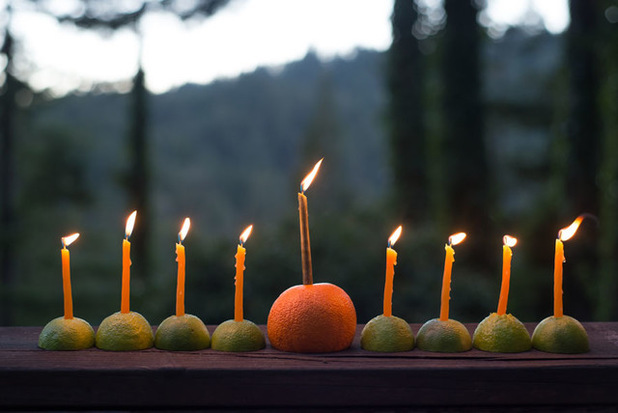
There’s a bit of mystery as to what Hanukkah is among non-Jews. I grew up in America and went to an “alternative” grade school in the 1970s, where they attempted to teach us about different cultures. One winter, when I was in the first grade, some nice ladies came and told us the Hanukkah story. I think even then they stressed it was NOT the Jewish Christmas, and they told us the traditional gift for children was a simple orange, which were scarce in Northern Europe and reminded Jews of their true homeland.
That’s the good news about Hanukkah, if you’re worried about what gifts to buy. Hanukkah isn’t a big gift-giving holiday. Children may expect an orange or Hanukkah gelt, foil-wrapped chocolate coins. It’s traditional for children to spin the dreidl on Hanukkah, and foods fried in oil—doughnuts and potato pancakes or latkes—are traditional, for reasons to be explained below.
Of course in Western society, in majority-Christian cultures, Hanukkah must compete in the mind of the child with that grand finale of all holidays, Christmas. Christmas is so pervasive it has been adopted even by the non-Christian Japanese. In the Soviet Union they could never quite get rid of it, despite determined efforts to create a universal Winter Holiday with all sorts of fairytale and cartoon characters (including Disney characters towards the end-times for the USSR). Romanian dictator Nicolae Ceaușescu only really met his fate after he outlawed Christmas. Santa Claus seems to have some very powerful friends, and as the saying goes, you can’t fight city hall, in this case, you can’t fight the pull of the North Pole and Santa’s workshop. Of course Jews aren’t fighting, or joining, just maintaining what is called the minor holiday of Hanukkah in parallel with the Christian festival.
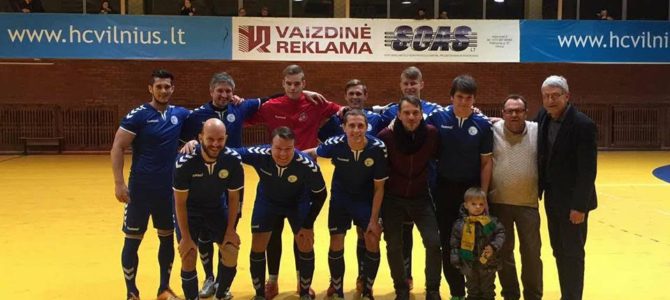
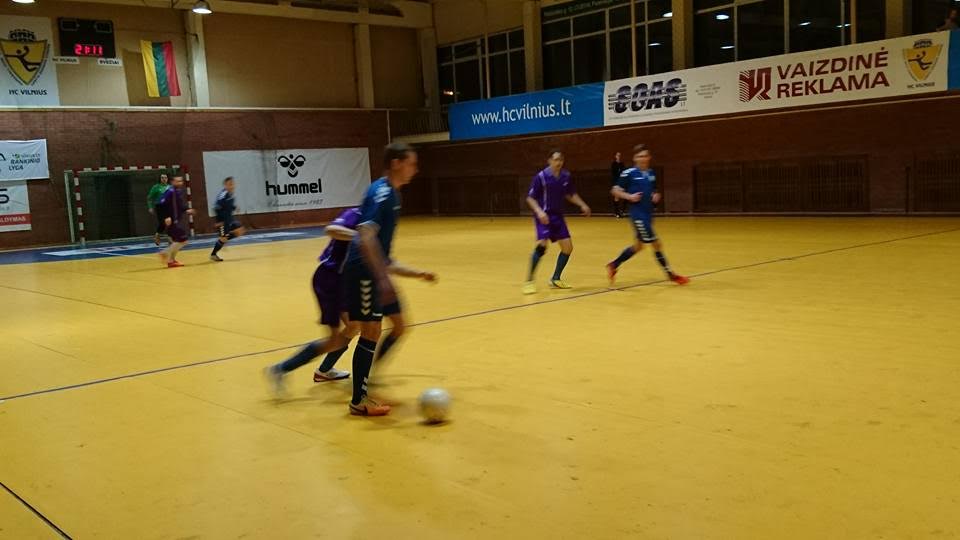
The mini soccer team of the Makabi Lithuanian Athletics Club is competing successfully in the Vilnius district tournament Select II in the Sunday League, which includes 10 teams. After foru matches Makabi are now in fourth place. The tournament continues and let’s hope after some injured players return our team makes it to the top. Good luck!
Vilnius Jewish Community
Etia Suvorova (December 2)
German Levin (1 December 9)
Ale Šimulynienė (December 10)
Dora Mesengiser (December 17)
Anastazija Votrinienė (December 18)
Saida Mazuro (December 22)
Olga Orlovskaja (December 26)
Palina Pailis (December 26)
Kaunas Jewish Community
Ženė Živulinskienė (December 1)
Borisas Jocheles (December 3)
Rema Lorman (December 5)

Recently events held by the Lithuanian Jewish Community have surpassed one another in the quality of organization and the positive emotional interest and participation by Community members have been a source of joy. LJC chairwoman Faina Kukliansky would like to thank organizers and participants:
“All of your contributions have made the life of Community members more interesting and diverse. We will remember the warm and moving moments we spent together when we all kneaded dough together with our daughters and grand-daughters, with our friends and guests during Sabbath challa-making events at all the communities in Vilnius, Kaunas, Klaipėda, Panevėžys, Ukmergė and Šiauliai, all of us joining together for the first time in the global Jewish Shabbos Project. I thank project coordinator Dovilė Rūkaitė, all the heads of the regional Lithuanian Jewish communities and the Bagel Shop cooks who participated together. I also thank the Lithuanian Cultural Council who supported the project.
I would also like to thank the organizers of the Mini-Limmud conference and its main supporters, the European Jewish Fund and the Goodwill Foundation, who supported the preparation of the program and the organization of interesting meetings. The traditional Limmud conference never fails to attract a group of concerned and engaged members of the LJC and their families to its ceremonial Sabbath dinner. It is important for us to come together and talk, to spend time in a pleasant environment, so we always strive to gather on weekends, in a beautiful natural setting at a good hotel, and to invite interesting guests to take part in a meaningful program, see famliar faces and discuss current events. Mini-Limud coordinator Žana Skudovičienė, who fields all preferences and ideas for the conference and balances different interests, insured that this year’s Limmud was memorable and event which provided good emotions and rest and recreation.
Thank you, all of you!
Faina Kukliansky, chairwoman
Lithuanian Jewish Community
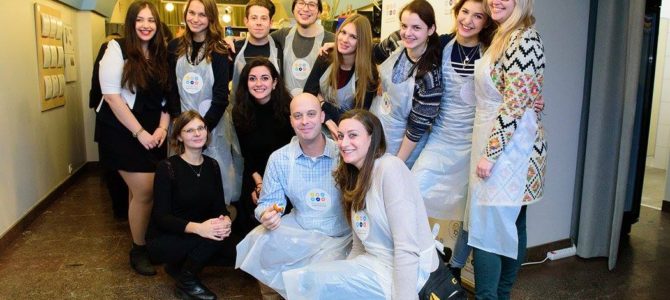
The World Union of Jewish Students has nominated the Lithuanian Union of Jewish Students of the Lithuanian Jewish Community for awards in two categories.
Lithuanian Union of Jewish Students director Amit Belaitė is up for one of the awards, and says her friends and colleagues in the Union need to learn more about Jewish life and Jewish traditions. She said Jewish students in Lithuania have been cut off from many Jewish things, including how to celebrate Sabbath, largely because Jewishness was forced into hiding in Lithuania after the Holocaust. She added there is a revival underway in Lithuania, including of Jewish holidays our great-grandparents celebrated, and said now there is a great deal of communication with Litvaks of the same age as Union members living around the world who have not lost their traditions.
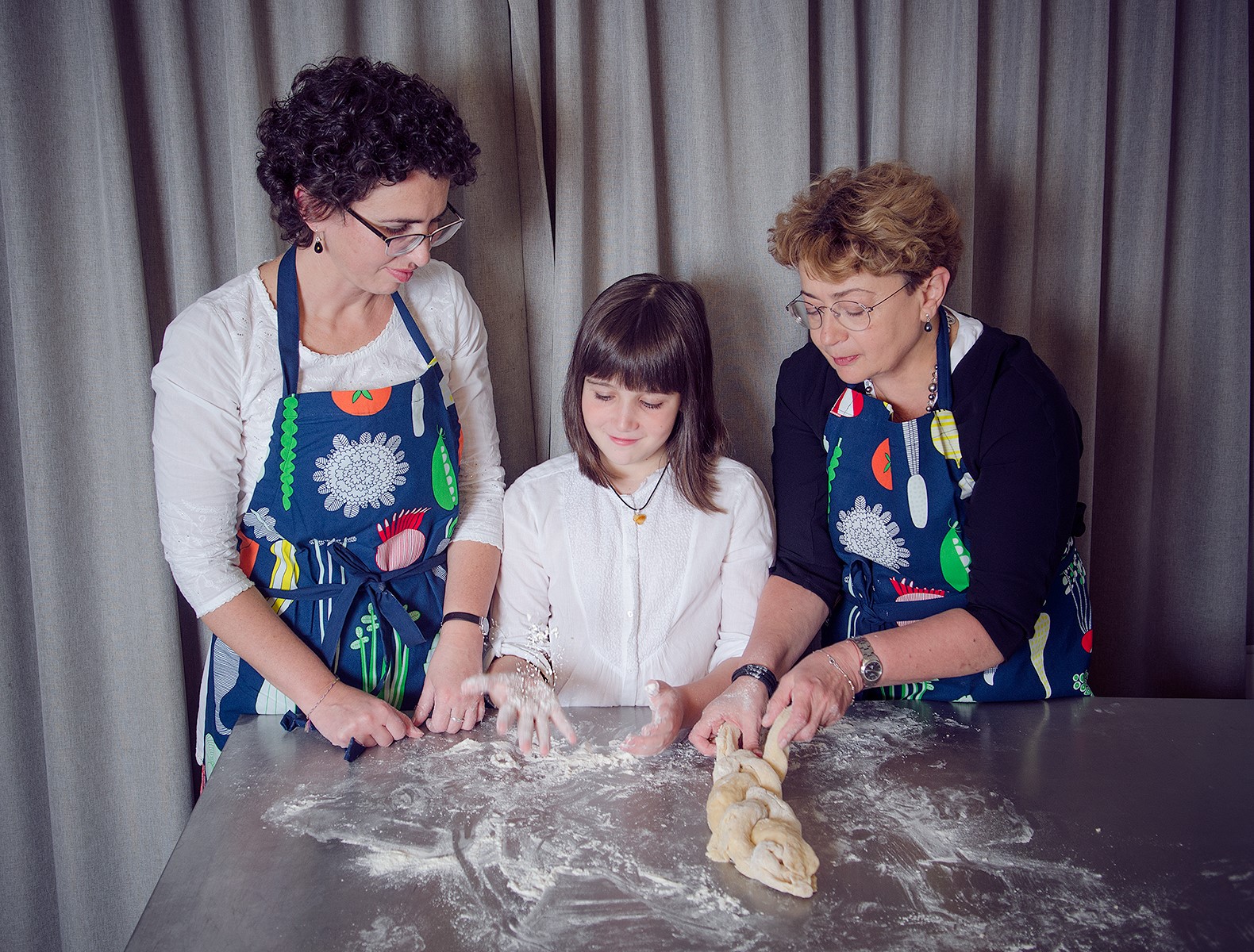
The Lithuanian Jewish Community invites you to participate in the international Shabbos project!
We’re inviting all Community members to come bake challa and celebrate the Sabbath together on November 10 in Vilnius!
Jewish communities around the world will be baking traditional challa bread on November 10. This fun project has been going on for three years and includes Jewish communities in 65 countries. This is the first time the Lithuanian Jewish Community is participating. We’re inviting all regional communities, families, mothers and daughters to gather together and bake challa together in their own communities. Grandmothers, mothers, granddaughters, we’re hoping you will all come knead challa together at one table!
Registration is required because space is limited. goo.gl/fEmzp4
Program:
6:00 P.M. We activate the yeast and knead the dough
6:30 P.M. The story of the Sabbath
7:00 P.M. We braid the challa
7:30 P.M. We bake the challa
More information available here.
Happy 70th birthday to Davidas Kocas! On November 6 he’ll turn 70.
Davidas is an important part of the team and as a member of the executive board of the Vilnius Religious Community he monitors Jewish cemeteries and organizes clean-up activities. A hearty HAPPY BIRTHDAY from the entire Lithuanian Jewish Community!
We wish you great health and that everything you undertake would be successful! That the people you love would be happy! That your home would always be open to friends! That you would never lack strength! That you will always be happy in all things!
Mazl tov!
Lithuanian Jewish Community deputy chairwoman Maša Grodnikienė is celebrating her 70th birthday! Maša is the initiator and intellectual force behind many of the cultural events held by the Community and has been deputy chairwoman for over 20 years now. Thanks to her the first World Litvak Congress was held in Vilnius in 2001, marking a turning point within the Community and the renaissance of Litvak culture in Lithuania. Maša has contributed so very much to fostering Litvak culture within the Community and in the world.
On the occasion of her birthday, the Community has nothing but the most heart-felt words to say to Maša. We congratulate her on her birthday and wish her the best health, joy at home with her grandchildren, many more creative initiatives in the Jewish Community, a great mood and many more warm moments in life. Happy birthday!
Mazl tov!
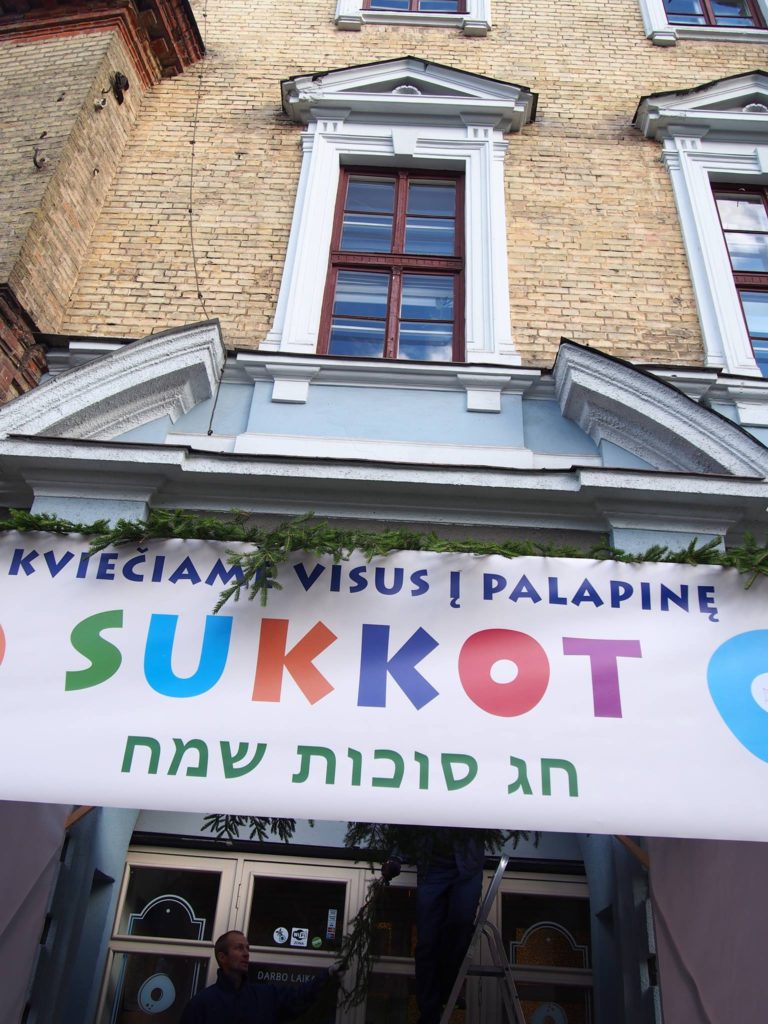 Sukkah at Bagel Shop Café on central Pylimo street in Vilnius
Sukkot, the Jewish feast of tents which is often translated in English as the feast of tabernacles, begins on the evening of October 16 this year, or Tishrei 15 on the Jewish calendar. A booth is built for Sukkot called a sukkah where for seven days the family has dinner, children play and as much time as possible is spent. That’s how it works in warmer climates, and today there are sukkah houses outside homes across Israel. Many Jews build the shelters in their yards or even on apartment balconies.
Why spend time in temporary shelters? The answer comes from Leviticus (Vaikra) 23:42-43: “Ye shall dwell in booths seven days; all that are Israelites born shall dwell in booths: That your generations may know that I made the children of Israel to dwell in booths, when I brought them out of the land of Egypt: I am the Lord your God.”
It’s traditional to place the four species or arba minim in the tent or booth during the holiday. These are the etrog (a specific kind of citrus fruit), and branches from palm trees, willows and myrtle trees. Leviticus 23:40: “And ye shall take you on the first day the boughs of goodly trees, branches of palm trees, and the boughs of thick trees, and willows of the brook; and ye shall rejoice before the Lord your God seven days.” The branches and fronds are traditionally used to decorate the booths and waved during the holiday.
Jews often take their evening meal in the shelter and recall the flight of their people from Egypt. However you choose to celebrate the holiday, the Lithuanian Jewish Community wishes you and your family a happy Sukkot!


by Andres Spokoiny
We’re more affected by architecture than we might want to believe. The built environment conditions our thoughts and behaviors. Every building sends a message.
Totalitarian regimes know this well; they often have explicit architectural doctrines. Stalinist architecture favored monstrous, colorless buildings, exalting the collective over the individual. Creating monumental structures for Nazi rallies, Albert Speer evoked submission, aligning the crowd toward a single leader, rather than fostering talk among the people.
I have personal experience with totalitarian architecture. Argentinean juntas didn’t build huge buildings (mostly because they embezzled the money allocated for that), but they did renovate many Buenos Aires squares and parks. One of the most emblematic is Plaza Bernardo Houssay, tucked amid University of Buenos Aires buildings. The junta redesigned this space to make it impossible for students to stage demonstrations. The square was filled with irregular steps and levels. A water basin and a new church were built to leave no room for large crowds on the lawn. Beautiful art nouveau benches were replaced by uncomfortable concrete seats, placed so as not to face each other. Ancient jacaranda trees were uprooted, making it unappealing for students like me to fraternize under the baking sun. The traditional Spanish square, which serves as a focal point for diverse people to meet, chat, play dominoes, and philosophize, was no more.
The Jewish people is not particularly known for its architectural exploits. Our most important building in the world is a patched-up, badly eroded wall. Yes, there are great individual Jewish architects, but as a people, words are our forte — not bricks. As we celebrate Sukkot, however, suddenly Jews are forced to become architects. And it’s worth asking: if a building always sends a message, what does the sukkah tell us?
Lithuanian prime minister Algirdas Butkevičius has sent birthday greetings to art history and theater scholar Markas Petuchauskas on the occasion of his 85th birthday.
“You are an important creator of the cultural history of Lithuania and have dedicated many years of your life to the study of art and art history, and especially the development of our theater. Led by mature wisdom and relying upon your wide erudition, you have revealed to us the unique nature of works by famous artists and have painted detailed and colorful pictures of celebrated personalities. You have always been a person of wide horizons and constructive dialogue, and therefore have contributed much to the understanding and to the good cooperation between the Jewish and Lithuanian peoples.
“I sincerely thank you for your great contribution to the spiritual fortification of our state and enrichment of cultural life,” the Lithuanian prime minister said in his birthday greeting.
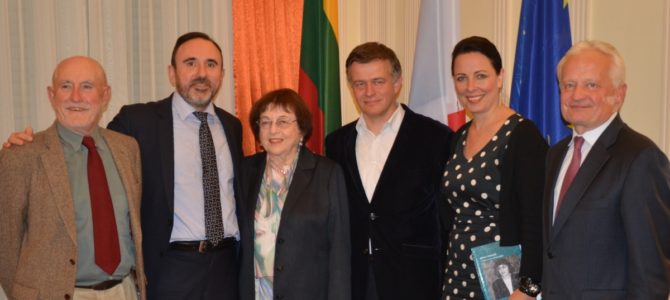
The Lithuanian embassy in Paris hosted the launch of Yves Plasseraud’s new biography in English, “Irena Veisaitė: Tolerance and Involvement,” October 3. Lithuanian ambassador to France Dalius Čekuolis spoke and said he was happy to have the opportunity to present a French author’s book in English about a noble Lithuanian person who has inspired and set an example of tolerance, and who is an active champion of European values.
The presentation was followed by a discussion with the author, academic and attorney Yves Plasseraud, and the guest of the evening, Irena Veisaitė herself, professor of literature, drama critic and human rights activist. The discussion was moderated by professor Šarūnas Liekis, dean of the Political Science and Diplomacy Faculty at Vytautas Magnus University in Kaunas. Veisaitė’s daughter Alina also attended with her son and friends.
Veisaitė, born in Kaunas in 1928, is a well-known public figure in Lithuania, a celebrated scholar of the theater, a professor of literature, one of the founders of the Lithuanian Open Society Fund and a member of the Lithuanian national UNESCO commission from 1999 to 2007. She is a member of numerous international and national NGOs and has received many awards and distinctions in Lithuania and other countries. Veisaitė has consistently emphasized the need for dialogue and tolerance even in the most difficult situations life has to offer in all her work.
The Lithuanian Jewish Community wishes professor habil. Markas Petuchauskas a happy 85th birthday! The doctor of art history has written many books on theater and drama over many years.
We wish him continuing health, continuing creativity and hope for another of his wonderful books. Let’s all wish him inspiration, success and love.
Today Markas Petuchauskas is the only person who can speak with real authority about the Vilnius ghetto theater which operated in 1942 and 1943. He was a ghetto prisoner and miraculously survived, as did his mother, after being rescued by good people. For many years he has sought to renew the interrupted dialogue between Lithuanians and Jews, which, he says, is best understood through art.
Happy Birthday! Mazl tov! May you live to 120!
Happy birthday and mazl tov to all members born in October!
Vilnius Jewish Community and Social Programs Department members:
Larisa Magid (October 1)
Jevgenija Pesina (October 1)
Aleksandr Levin (October 4)
Jacob Pilansky (October 5)
Markas Petuchauskas (October 6)
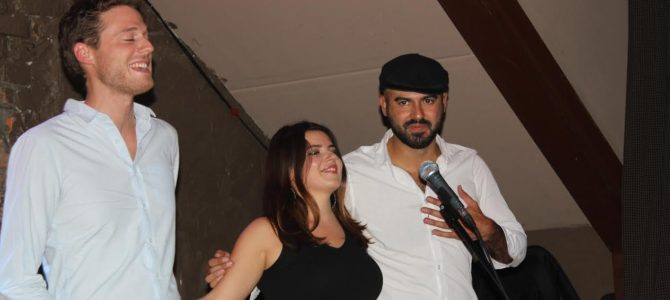
A large contingent of Kaunas Jewish Community members came out to ring out the old and usher in the new year, 5777, wishing one another harmony, health, positive changes and good ideas. The evening of celebration was unusually warm, cozy and family-like. The Levita group of young musicians from France contributed with some great music performed extraordinarily well. The vocalist Vita Levina is the daughter of long-time Kaunas Jewish Community member Leonidas Levinas and began her musical career in Kaunas.
Happy New Year to all members of the Community, young and old! We are ushering out what was a successful year, and we have reason to be happy and proud of it, and now we look forward to an even better year. I wish everyone strong health and a sweet and successful year ahead for you and your families. I invite everyone to do at least on good deed for the community over the coming year, and I especially invite those to do this who believe there are things that aren’t right within the community. Do what you think is right, don’t be afraid to do good deeds and let’s not fear the consequences. I wish you love of the country in which you live, to love Israel, and to raise your children as Jews, the future members of our community.
שנה טובה ומתוקה
by Andrés Spokoiny
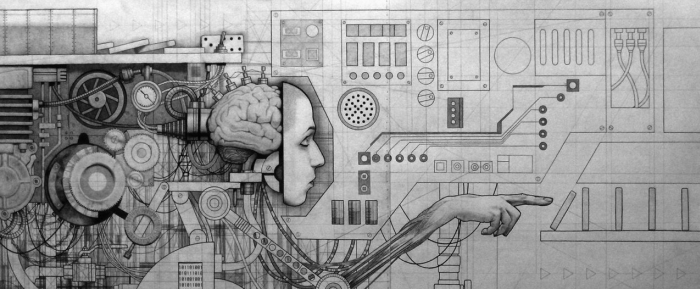
In 2007, at Bernstein Center for Computational Neuroscience in Berlin, scientists conducted a troubling experiment. They put people into an MRI machine and asked them to press one of two buttons in front of them. The subjects were told to do this several times, and to choose freely which button to press.
One part of the results was nothing new: around a second before the button was pressed, the parts of the brain associated with conscious decision-making lit up. But looking more carefully, the scientists noted that there was a pattern of neural activities around six or seven seconds before the decision was actually taken. That pattern predicted with great accuracy the decision that the person ended up taking.
The researchers were shocked, because these findings suggest that decisions are not really conscious. Rather, they are subconscious neural processes that are complete before our “command and control” functions ever activate. We may think that we’re about to consciously decide something, but in fact, our subconscious has already (and irrevocably) decided.
by David Harris
Surveys reveal a disturbingly large number of American Jews who feel disconnected from their Jewish identity. How painfully sad! In response, and with the High Holy Days just around the corner, let me share, as I have on occasion in the past, what being Jewish means to me.
1. It means championing what is arguably the single most revolutionary concept in the annals of human civilization—monotheism—introduced to the world by the Jews, and its corollary, the inherent belief that we are all created in the image of God (in Hebrew, B’tzelem Elohim).
2. It means embracing the deep symbolic meaning the rabbis gave to the story of Adam and Eve. Since all of humanity descend from the “original” couple, each of us, whatever our race, religion, or ethnicity, shares the same family tree. No one can claim superiority over anyone else.
3. It means entering into a partnership with the Divine for the repair of our broken world (in Hebrew, Tikkun Olam), and recognizing that this work is not to be outsourced to a higher authority, or to “fate,” or to other people, but that it’s my responsibility during my lifetime.
4. It means affirming life – “I have set before you life and death, blessing and curse, therefore choose life, that both you and your descendants may live” (Hebrew Bible) – and the moral choice that lies in the hands of each of us to bring a little closer the Jewish prophetic vision of a world at peace and in harmony.
5. It means celebrating the fact that Jews were early dissidents, among the very first to challenge the status quo and insist on the right to worship differently than the majority. Today, we call this pluralism, and it is a bedrock principle of democratic societies. It also ought to be an essential component of Jewish communities everywhere.
6. It means welcoming the pioneering Jewish effort to establish a universal moral code of conduct and seeking to act as if that code of conduct were my daily GPS—to pursue justice, to treat my neighbor as I would wish to be treated, to welcome the stranger in our midst (and, I might add, the newcomer to the Jewish people), to be sensitive to the environment, and to seek peace. It’s not by accident that America’s Founding Fathers chose words from the Hebrew Bible for our nation’s Liberty Bell: “Proclaim liberty throughout all the land and unto all the inhabitants thereof.” Or that the Ten Commandments continue to be an ethical guidepost for so many around the world.
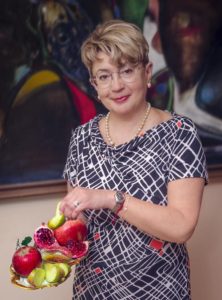
The Lithuanian Jewish Community wishes Ella Gurina a happy 70th birthday. She has been a constantly active member of the Community, a doctor, a member of the board of executives who participates in everything and is extremely demanding of herself.
Dear Ella, please accept our birthday wishes for continued health and great happiness and may all your days be beautiful ones brightened by your joy and hope. Happy birthday on this important milestone. May every day bring you greater success and happiness!
Mazl tov!