Easy Anti-Semitism Test

Easy Anti-Semitism Test

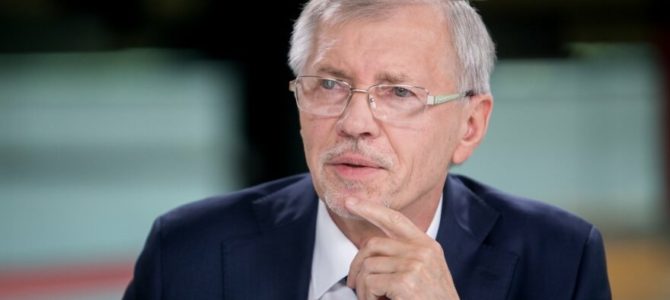
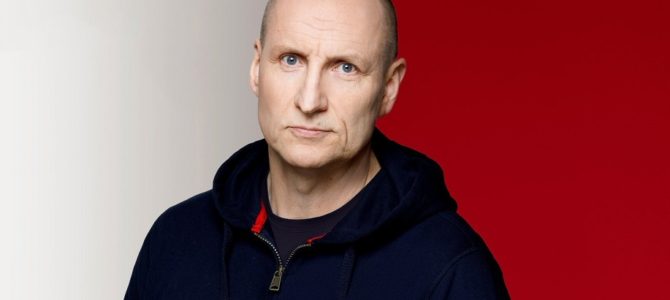
by Sigitas Parulskis

When I think about Lithuanian anti-Semitism, there is a lack of reasoning. How can you hate someone who isn’t there? And there are almost no Jews left in Lithuania. It would be the same as being afraid of or hating the Wizard of Oz because he didn’t give you a brain.

Lithuanian anti-Semitism’s list of grievances, its casus belli, was fully formed in the period from 1939 to 1941. The loss of the Klaipeda region, the Soviet occupation, deportation, massacres, the Nazi invasion–all good reasons to look for a culprit. And here we are, still afflicted by this hapless anti-Semitism. Is it in our subconscious? In our genes? We are no longer living under conditions of occupation and war, so where does this anachronism come from?

Is it possible for us to overcome our warped relationship with Jews? Everything’s possible, if there’s a will and reason. And this is a political rather than a cultural relationship. The political man proclaims truth is on my side, while the cultural man asks what in the hell truth is anyway, and to me this question seems more interesting, more imaginative and more human.

Full text in Lithuanian here.
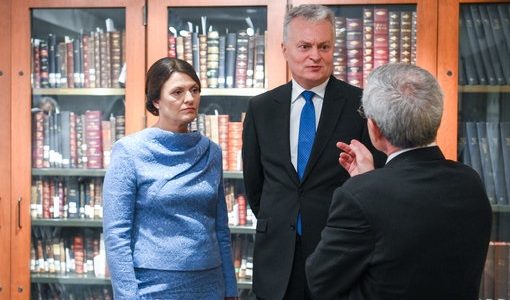
Lithuanian President Visits YIVO

Lithuanian President Visits YIVO

Lithuanian president Gitanas Nausėda and his wife Diana visited YIVO on the last day of the president’s trip to the United Nations in New York City. They met staff, viewed exhibits and learned about the world-famous Jewish research institution founded in Vilnius in 1925.

“Jewish history and culture have formed the identity of all countries of the world, not just Lithuania. Since the 15th century the Lithuanian and Jewish communities have been united by a common rich history. Vilnius was even called the Jerusalem of the North. Activities of Lithuanian Jews have left behind a priceless religious and philosophical legacy for the entire world Jewish community which is celebrated by the YIVO institute in New York,” the newly-elected president said.

information from the President’s Office

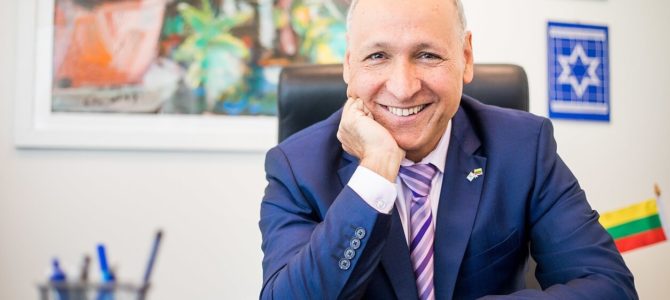
New Israeli Ambassador Tells Lithuania to Look in Mirror

New Israeli Ambassador Tells Lithuania to Look in Mirror

Photo by J. Stacevičius/LRT

by Mindaugas Jackevičius, LRT.lt

We’re not ordering you, we’re only asking you to take a mirror and take a look at yourself, to open the history books and check out what happened in the dark chapters. That’s what Israeli’s new ambassador to Lithuania Yosi Levy said in an exclusive interview with LRT.lt . He thinks most Lithuanians don’t know what happened to the Jews of Lithuania during the war, that it is a story which hasn’t been told appropriately.

At the same time, he says, Israel doesn’t blame today’s Lithuania, and emphasizes mature and good relations between the countries.

On the person of Jonas Noreika, Levy said: “He wasn’t a murderer, but he collaborated with the devil.”

Levy, who began his work in Lithuania over a month ago, is a well-known writer and has worked as ambassador in Belgrade and worked at the embassies in Bonn, Berlin and Warsaw. In the interview we spoke about the fate of Lithuania’s Jews, bilateral relations and an intriguing book which will open the eyes of Lithuanians to a different side of Israel and its ambassador.

Rosh Hashanah 5780 at the Choral Synagogue

Rosh Hashanah 5780 at the Choral Synagogue, Pylimo street no. 39, Vilnius:

Sunday, September 29

6:00 P.M. Minkha/Maariv, prayers, Kiddush/pastry table

Monday, September 30

9:30 A.M. Shakharit (morning prayer)

12:00 noon Blowing of the shofar horn. Special souvenir for participants and new 5780 Jewish calendar

12:30 P.M. Musaf (prayer)

5:00 P.M. Tashlikh (prayer at the river, Bokšto street no. 19, Vilnius)

6:00 P.M. Rosh Hashanah celebration: blowing of shofarhorn, presentation of new Jewish calendar, treats, special Rosh Hashanah souvenir

7:51 P.M. Maariv prayer

Tuesday, October 1

9:30 A.M. Shakharit
12:00 noon Blowing of shofar
6:30 P.M. Blowing of shofar horn (at Bokšto street no. 19 with entrance from Kazimiero street no. 12)

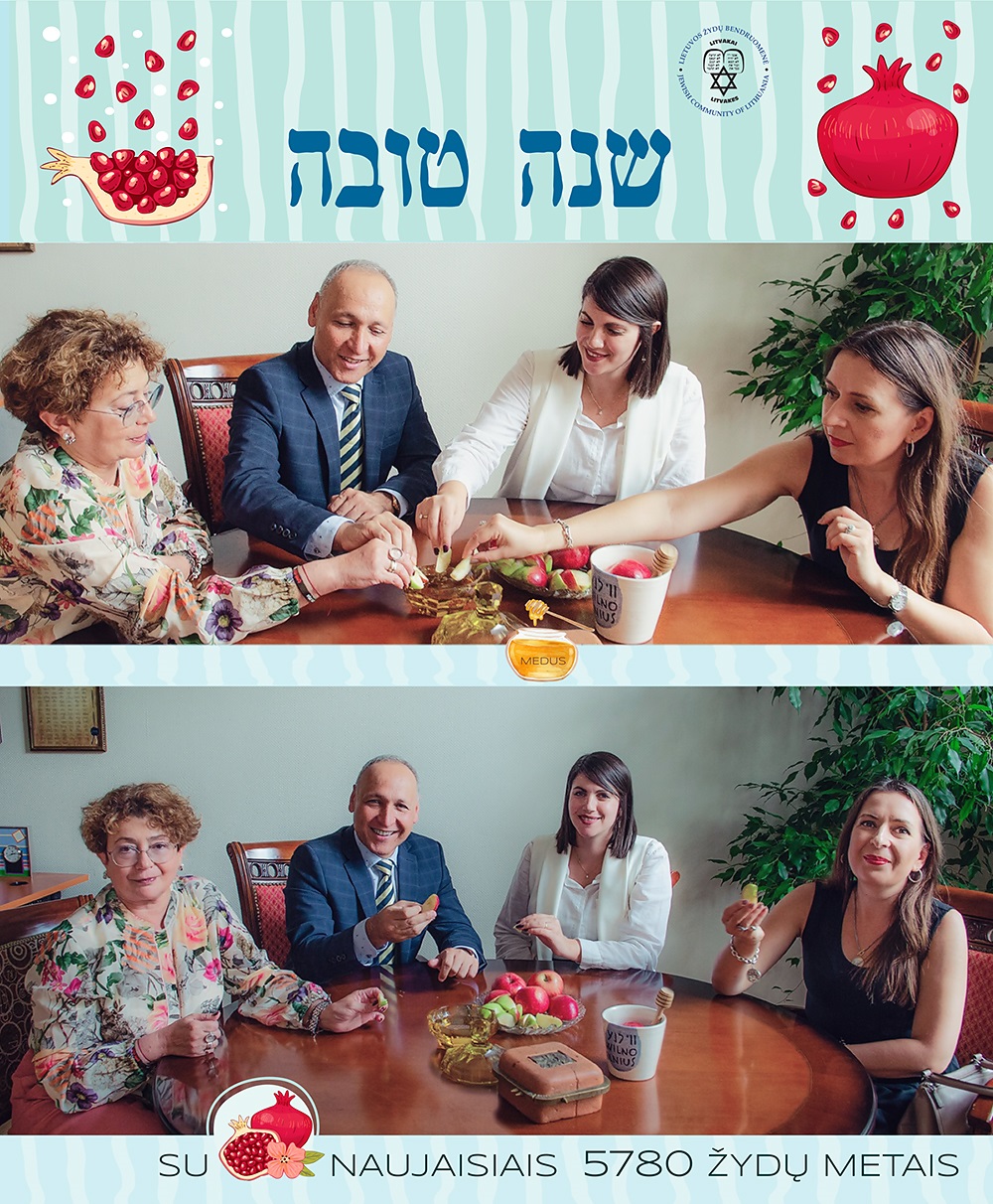
The Lithuanian Jewish Community Wishes You a Happy and Sweet New Year

Lithuanian Jewish Community chairwoman Faina Kukliansky, Israeli ambassador to Lithuania Yossi Levy, embassy aide Adi Cohen and writer Kristina Sabaliauskaitė wish you a good, happy and sweet new year. It’s customary to invite friends and relatives over for New Year’s both to have a party and to keep a mitzvah.

Rosh Hashanah is a happy holiday with pomegranate, round challa bread and apples essential elements. Pieces of apple are immersed in honey and eaten while wishing others a good and sweet new year.

Kaunas Jewish Community Holds Holocaust Commemoration at Ninth Fort

Kaunas Jewish Community Holds Holocaust Commemoration at Ninth Fort

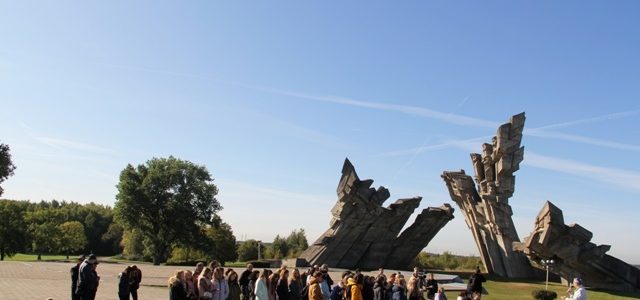
The Kaunas Jewish Community and the Ninth Fort Museum held a Holocaust commemoration on the morning of September 23. Kaunas students and cultural workers also participated in the civic initiative called “Way of Memory.”

Georgian musician Davit Kldiashvili performed and attendees viewed a Ninth Fort exhibit on the Holocaust.

After the event a group of Kaunas Jewish Community members attended the Holocaust commemoration held in Balbieriškis which also commemorated the vitality of Jewish life in the Lithuanian shtetlakh and Volfas Kaganas, Lithuanian military volunteer and twice recipient of the Order of the Cross of Vytis.

Moisiejus Preisas, Survivor of Three Concentration Camps, Dies at 89

Moisiejus Preisas, Survivor of Three Concentration Camps, Dies at 89

Moisiejus Preisas, survivor of Auschwitz, Dachau and Stutthof, passed away September 24 at the age of 89. He was born February 27, 1930 and was a member of Lithuania’s Union of Former Ghetto and Concentration Camp Inmates. We send our deepest condolences to his son Leonidas and his grandchildren.

Preisas is believed to be the only Lithuanian Jew to have survived three concentration camps. He was an eye-witness to the brutal murder of the Jewish children in the Kaunas ghetto. He also witnessed an officer at a concentration camp chop people in half with a shovel.

Photo: Preisas with his collection of photographs of the Holocaust and concentration camps.

Several years ago we translated and published an interview and article about Moisiejus Preisas on the Lithuanian Jewish Community website here.

Traditions of Rosh Hashanah, the Jewish New Year

Traditions of Rosh Hashanah, the Jewish New Year

H“B

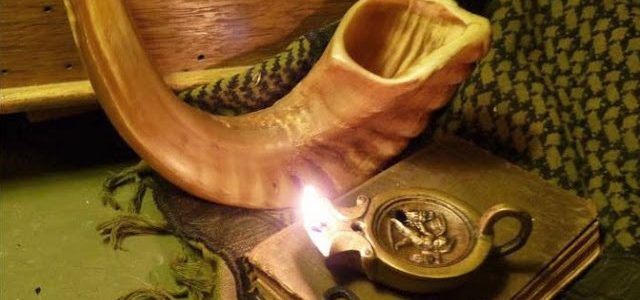
The most iconic image of the Rosh Hashanah or Jewish New Year celebration is the blowing of the shofar horn. It is a ram’s horn and it is difficult to blow it correctly. The shofar reminds believers of the coming Day of Judgment. Jews gather at synagogue and read prayers for two days during the holiday.

An important Rosh Hashanah tradition is to take clothing to a body of water and shake the pockets out, symbolically ridding oneself of remaining sin. A special prayer is read for this. The ritual is called tashlikh (Hebrew “cast off”).

The main holiday treat on Rosh Hashanah is the pomegranate. This is replaced by apples and honey in Lithuania where the fruit doesn’t grow to maturity. The honey is intended to make the coming year sweet. In fact the salutation “sweet year” is a requisite part of the well-wishing involved in the holiday.

Often guests are served fish and it must have a head, because Rosh Hashanah literally translates as “head of the year.” A round loaf of challa bread is baked for the dinner table symbolizing the cyclicity of the year. On Rosh Hashanah G_d decides a person’s destiny for the coming year, in this case 5780. There is a Rosh Hashanah greeting, “khatima tova,” which is a wish for success you will be written into the Book of Life.

The tenth day of Rosh Hashanah is Yom Kippur, or the Day of Atonement. The Torah tells us not to do anything on that except reflect on our actions over the preceding year. It is the time when a final decision will be made regarding the destiny of the individual over the coming year. Jews wish one another “gmar khatima tova,” good luck with the final inscription.

The Vilnius Jewish Religious Community, the Lithuanian Jewish Community and the Goodwill Foundation greet you with “shana tova u’metuka,” or “sweet new year,” and hope to see you at synagogue!

Simas Levinas, chairman
Vilnius Jewish Religious Community

Time, Neglect, Disregard Responsible for Ruinous State of Jewish Cemetery in Kaunas, Not NATO Tanks from Germany

Time, Neglect, Disregard Responsible for Ruinous State of Jewish Cemetery in Kaunas, Not NATO Tanks from Germany

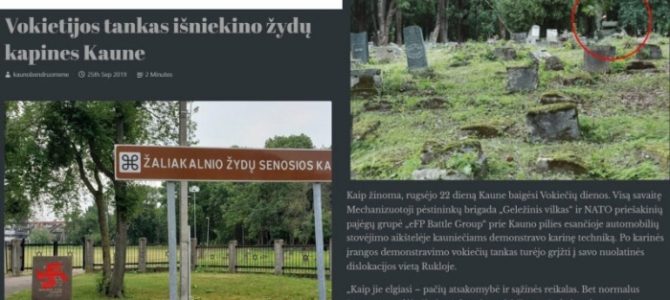
A website claiming to represent the Kaunas Jewish Community published Wednesday a wholly incorrect report that German tank forces under NATO had desecrated a Jewish cemetery in Kaunas, Lithuania’s second largest city, and that swastikas had been painted on gravestones there.

Kaunas Jewish Community chairman Žakas Gercas said the website was not affiliated with the Kaunas Jewish Community and that his community always publishes its news and announcements at www.lzb.lt

Lithuanian Jewish Community chairwoman Faina Kukliansky commented: “This
was a shock to me. After checking what was reported, I can say this is fake news and an informational attack. We have reported this to the Lithuanian institutions which deal with this and have asked that this be stopped. I call upon all people not to submit to this provocation and not to sign this so-called petition. It is a great shame that on the eve of the Jewish new year our Community is being exploited for these sorts of provocations. All the more since at this time the president and foreign minister of Lithuania are visiting the US.” Chairwoman Kukliansky refused to speculate who might be behind this fake news, but cautioned that “no one does these sorts of things for no reason at all.”

Attention Eleventh and Twelfth Graders: English Lessons

Attention Eleventh and Twelfth Graders: English Lessons

Attention all eleventh and twelfth graders: there will be additional English lessons for 11th and 12th graders beginning in October. The goal is to help students prepare for exams, both the state exam and IELTS, and to increase general English facility in areas such as grammar, speaking and reading.

The major gaps in knowledge are usually found in the field of grammar and we will spend most of the class time on English grammar, including theory, practice and activities. Children and young people will get to know English grammar structures and will have the chance to use them.

The maximum class size per group is limited to 12 students. There will be two lessons every week. The teacher is Viačeslav Mlynkovskij, an English teacher at the Sholem Aleichem ORT Gymnasium in Vilnius. Classes will be held at the Lithuanian Jewish Community located at Pylimo street no. 4 with easy access by foot and mass transit.

Schedule:

Monday, 6:30 P.M.
Wednesday, 6:30 P.M.

The cost is 48 euros per month (comprising 8 lessons). Individual lessons cost 7 euros apiece. To register call 8 652 05992 or write mlynkovskij@gmail.com

Rosh Hashanah on September 29

Rosh Hashanah on September 29

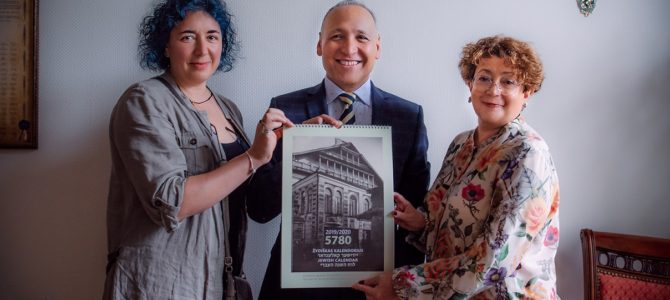
Israeli ambassador Yossi Levy, LJC chairwoman Faina Kukliansky and designer and architect Victoria Sideraitë-Alon hold up the new Jewish calendar for 5780.

The Lithuanian Jewish Community has published a new Jewish calendar for 5780 as we prepare for Rosh Hashanah, the Jewish New Year. This year’s calendar features Lithuanian synagogues past and present.

The year 5780/2020 contains some anniversaries of global significance to Jews, including the 300th birthday of the Vilna Gaon and the 580th anniversary of the building of the Great Synagogue in Vilnius.

LJC chairwoman Faina Kukliansky calls for everyone to come together for a noble cause, to work together to protect the small surviving inheritance of Litvak culture for our grandchildren and the future.

Launch of Russian Translation of Book about Veisaitė

Launch of Russian Translation of Book about Veisaitė

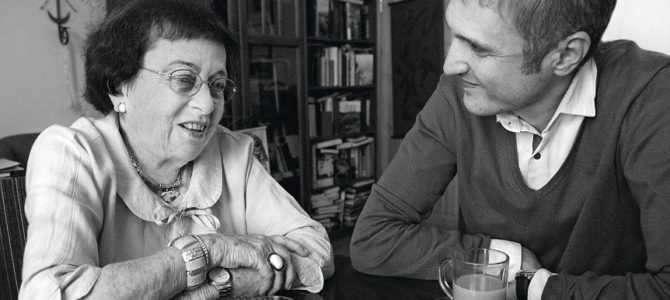
The Vilnius, Jerusalem of Lithuania Jewish Community invites you to the launch of the Russian translation of Aurimas Švedas’s book of interviews with Irena Veisaitė, “Gyvenimas turėtų būti skaidrus” [Life Should Be Transparent], at 3:00 P.M. on September 26 on third floor of the Lithuanian Jewish Community. Both Veisaitė and Švedas’ will be there and discuss the book with the audience, with Olga Ugriumova and Daumantas Todesas moderating. The event will take place in Russian.

Following the Bloodied Star of David to Panevėžys

Following the Bloodied Star of David to Panevėžys

Photos by P. Židonis

Jurijus Smirnovas is now in his 80s and all he remembers from his childhood is in the cross-hairs of a rifle scope. Many times over during his childhood he could have lost his life by being shot, hanged, beaten to death or poisoned, because during World War II he was marked by the star of David, soaked with the blood of millions of people.

His story, however, had a happier ending.

“I’ve been in Panevėžys for 75 years now. The Germans brought me here before I was eight,” he says with a deep sigh. “It’s very hard for me to speak about this, I haven’t wanted to tell the story and I don’t want to now either, to relive everything, to go back to that terror, fear. At these moments I feel awful,” the Jewish man said.

Kaunas Jewish Community Honors Active Members

Kaunas Jewish Community Honors Active Members

For years now the Kaunas Jewish Community has been giving thanks to our active members who take part in activities and help make them possible.

In earlier years this has mainly taken the form of a dinner party with live music, but this year we decided to take the volunteers on a tour in and around Kaunas.

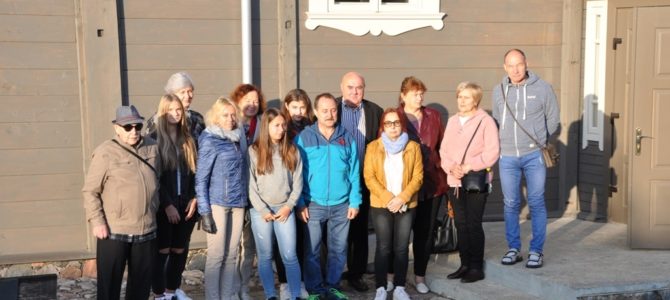
Members learned about the town of Kačerginė, its history and cultural legacy, listening to the enthusiastic narrative of Lina Sinkevičienė while taking in the rural beauty of the place. Members were received warmly at the headquarters of the Kačerginė aldermanship. The beautiful landscape conceals a bloody history and Kaunas Jewish Community members paid their respects to the Holocaust victims in Šakiai, Lukšiai, Zapyškis and surrounding areas.

Rositsan and Maccabi Elite Chess and Checkers Club Celebrates 30th Birthday

Rositsan and Maccabi Elite Chess and Checkers Club Celebrates 30th Birthday

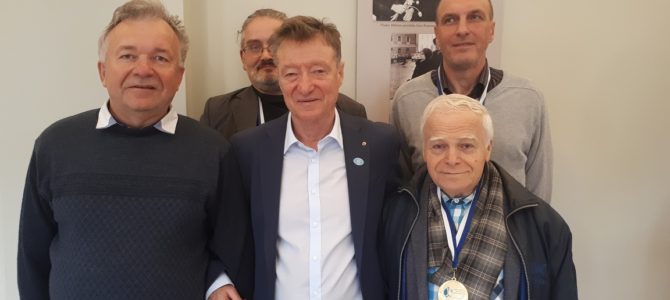
The Rositsan and Maccabi Elite Chess and Checkers Club celebrated its 30th birthday Sunday with a gathering of well-known Lithuanian chess players, families and children.

Everyone congratulated Boris Rositsan on the milestone, including Israeli ambassador Yossi Levy, Lithuanian Jewish Community chairwoman Faina Kukliansky, Lithuanian politician Vytautas Landsbergis and others.

Two brothers, FIDE chess master Boris and Michail Rositsan, founded the chess club 30 years ago using their own money and enthusiasm.

Remembering the Litvak Genocide: Let’s Remember Who Stands behind the Numbers

Remembering the Litvak Genocide: Let’s Remember Who Stands behind the Numbers

by Gediminas Kirkilas

September 23 is the Day of Remembrance of Lithuanian Jewish Genocide. On this day in 1943 the Vilnius Jewish ghetto was liquidated [sic, the ghetto was liquidated over several weeks–trans.]. Behind this fact hides the unusually complex and tragic history of the Jews of Lithuania (Litvaks), the unimaginably painful and tragic personal fates of Jews and their families. Of about 208,000 Jews resident in Lithuania, about 195,000-196,000 were murdered. Every year as we mark dates important to Litvaks, each time, let’s think hard about what hides behind these numbers.

We must continue to learn and teach and learn and teach more about the history of the Litvaks and the Holocaust, to increase our consciousness and sharpen our critical thinking, and to nip in the bud all kinds of right-wing extremism, so that there would be no place for xenophobia, racial and ethnic hatred and everyday domestic anti-Semitism in Lithuanian.

Full text in Lithuanian here.
Sunday School Activities for Children at the LJC

Activities include:

English lessons from 10:00 to 11:00 A.M. with Viačeslav Mlynkovskij, a teacher at the Sholem Aleichem school, in the Ilan Club room.

Hebrew lessons from 11:15 A.M. to 12 noon in the conference hall on the second floor.

Traditions from 12 noon to 12:45 P.M. in the conference hall on the second floor.

For more information and to register, contact teacher Ruth Reches, ruthreches@gmail.com

Panevėžys Jewish Community Tours Historic Jewish Sites in Liepāja

Panevėžys Jewish Community Tours Historic Jewish Sites in Liepāja

Early in the morning on September 14 we went to the Pakruojis synagogue, where we were met by a cultural worker who received us warmly and spoke about the wooden synagogue built by the local Jewish community in 1801. Its function changed and it became a primary school as well as a house of prayer. After the Holocaust the synagogue was nationalized. During the Soviet period it was a theater, then an athletics gymnasium. The unique building fell into disrepair and ruin. In 2017 the synagogue was restored with its authentic interior, according to period photographs, which show playful drawings on the ceiling. Currently the synagogue serves as a space for cultural and other events. The second floor–the women’s gallery–houses an exhibit on the Jewish past, along with examples of the original walls.

Pakruojis was just the first part of the tour and we travelled on to the land of wind, Liepāja [Libave] on the Latvian coast. It is also a land of amber, a port and a holiday destination. The rustling and smell of the lime trees [liepos in Lithuanian, a folk etymology–trans.] give the city its name. But we weren’t there just to look at the pretty town, we were there to visit the largest Holocaust memorial in Latvia. About 7,060 Jews including about 3,000 Jews from Liepāja were murdered in the dunes around the town of Šķēde on the Baltic Sea. In total about 19,000 people of different ethnic backgrounds were murdered here. The site recalls one of the worst breakdowns in humanity in the preceding century. The memorial occupies a territory of 4,120 m² and is arranged in a menorah shape with contours formed of natural rocks and granite slabs, with the “lights” of the menorah represented by granite steles resembling gravestones with inscriptions in Hebrew, English, Latvian and Russia from the prophet Jeremiah. Members of the Panevėžys delegation honored the dead and left a wreath there.